TheScientificTriangle
What about the environment and science
Eight infections (virus) that can cause cancer
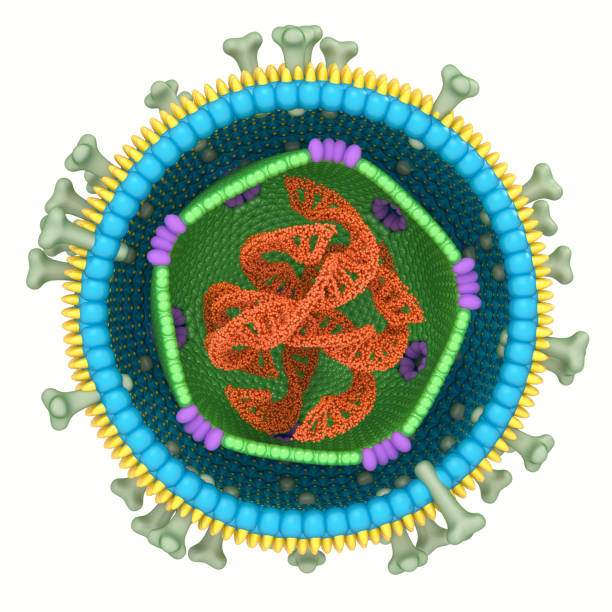
5) Epstein Barr Virus
It is a virus class which is best known for the kissing disease called infectious mononucleosis. There are other ways in which this infection can pass from one person to another and that is through coughing, sneezing, shaking hands and so on.
EBV as a short form is one virus which leads to an infection that can cause cancer eventually, if left untreated.
As it is with other Herpes agents, EBV is also lifelong and it infects (causes infection) in certain B cells of our body.
What are B cells?
Well, they along with T cells form the natural defense mechanism of our body.
So they are part of the immune cells which create first and second line defense system of our body. So the virus is quite clever, it attacks you by attacking your B cells.
Well, if you look at viruses you will always feel they are cleverer than us.
Variations is their strength and variants is what they bring every day to the human population. This is what makes their treatment difficult.
Neither is their a treatment, medicine or a vaccine for EBV. Unfortunately the body is left to cope with it. Sometimes, as always the body fails to cope with it and lo! We can become susceptible to cancer.
What kinds of cancer come up with EBV
Nasopharyngeal cancer
Lymphoma
Hodgkin Lymphoma
Stomach cancer
Susceptible races: Africa and some sections of South East Asia.
6) Human Immunodeficiency disease (HIV)
Does this disease need any introduction? I guess no! It doesn’t need an introduction.
Let us see what kind of cancers show up from a weak immune system?
- Kaposi’s sarcoma
- non-Hodgkin lymphoma
- Hodgkin’s lymphoma
- Cervical Cancer
- Lung Cancer
- Mouth or oral cancer
- Throat cancer
- Skin cancer
- Liver Cancer
- But, it is definitely a disease in itself and then comes the cancer (Virus brings the disease)
7) Human Herpes 8 (HH-8)
Do you see the number after Herpes? It is a human herpes virus as Herpes is common in many other species of animals.
Slow growing Kaposi’s sarcoma or lymphoma is what comes up.
8) Other viruses
Like the Human T-lymphotropic virus 1, Merkel Cell Polyoma Virus (MCPV), Simian Virus 40 are some of the other viruses which can be cancer causing agents.
Read about the first 4 viruses here.
 TheScientificTriangle
Pingback: Cancer stories- An encounter that holds meaning in this chaos ⋆ Rollercoasterrideonlife
Pingback: mRNA Cancer Treatment of BioNTech Proceeds to Human Trials ⋆ The Scientific Triangle