TheScientificTriangle
What about the environment and science
Mahabodhi Temple BodhGaya- UNESCO World Heritage Site 1
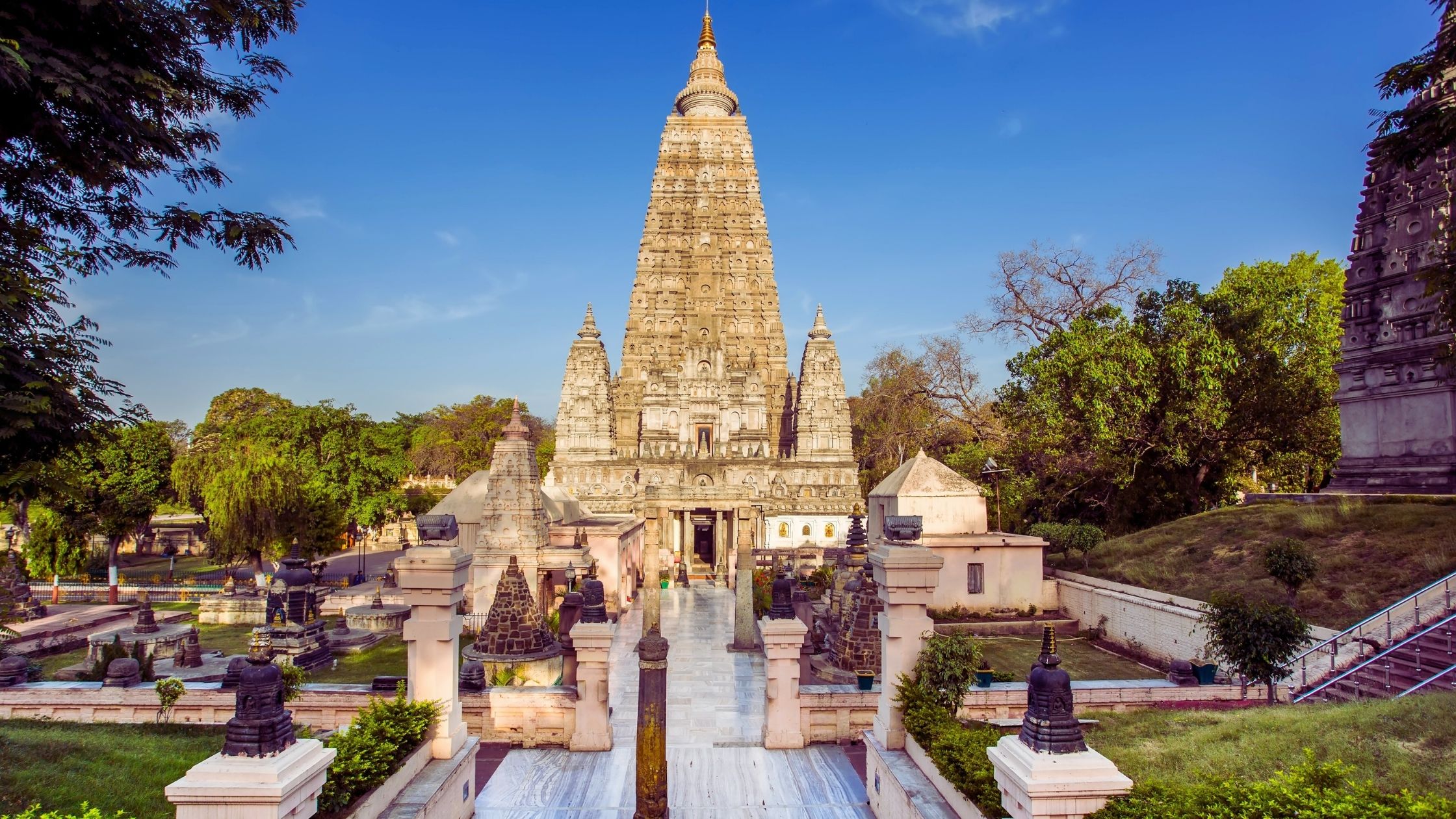
The Mahabodhi Temple Bodhgaya has been revered for centuries by Buddhists and every peace seeker of the world. When travelling towards Bodhgaya from Gaya, the dilapidated and stony landscape suddenly gives way to a clean, living and green environment. Strife and struggle seem to stall at the gates of the temple, and an altogether different feeling surrounds our souls.
The temple bells are distinctly audible once in a while as you approach the temple.
Quiet, mesmerizing and serene, soothing and peaceful, is how I can describe the place. Once in a while, you might hear monks chanting,
Buddham saranam gacchami…
Dhamam saranam gacchami…
Sangham saranam gacchami…
They pass by you quietly, oblivious of your presence.
One bright morning when I visited the temple, something in the environment made me quieter and calmer. The smell of incense, the continuous chanting of hymns by monks undisturbed by my presence and the bright sunny morning made me feel like I stood in a world so different from the one I left behind. The small town of Gaya could be defined like it was our world, and on the other end stood Bodhgaya.
One of the four holy pilgrimage sites for the Buddhists, BodhGaya is the place where Buddha attained enlightenment. Lumbini is where he was born, Sarnath is where he delivered his first sermon and Kushinagar is where his mortal body was finally laid to rest as Buddha attained Parinirvana.
After loitering for a while around the temple, I sat to read its history.
A bit about the history of the Mahabodhi temple
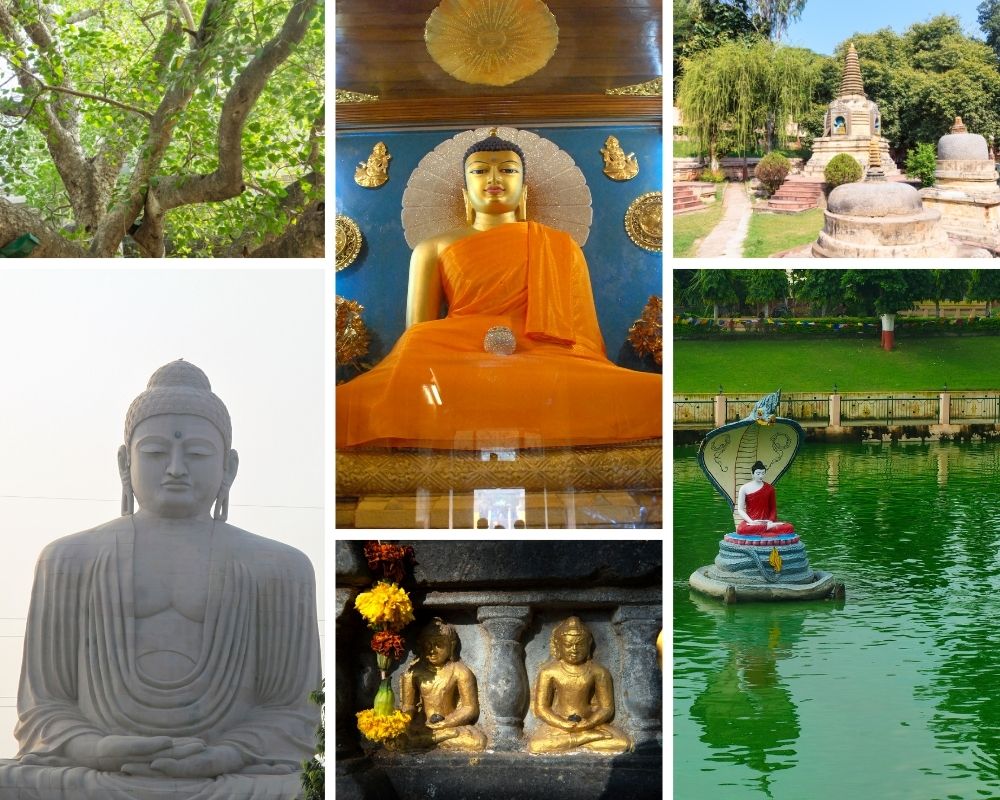
Sixteen kilometers from the district headquarters at Gaya, the temple contains some of the greatest wonders from the 5th and 6th century BC. The temple was built for the first time in the 3rd century BC (250 BCE), almost 2000 years after Buddha’s enlightenment. The temple standing now also dates back to the 5th or 6th centuries AD. Made of bricks, the temple structure is nothing ornate or gaudy. In 2002, the temple complex was declared as the UNESCO World Heritage site. There are seven sacred places around the temple, and each is built at a certain level. The levels mark the weeks Bodh spent while attaining his enlightenment.
- The temple complex comprises of the 11 meter high temple. The temple has entry gates in the North and the East, & the Indian style architecture is typical of the temple complex. A Diamond throne (also known as Vajrasana) is a defining factor of the temple-
- The Chaitya (Prayer Hall)- He spent his second week
- The Mahabodhi tree- spent the First Week
- The jeweled ambulatory, also called the Ratnachakrama, where Buddha paced up and down. He covered 18 paces back and forth. You can touch his lotus shaped feet built in the shape of the raised stone lotuses as you walk by the temple- spent his third week.
- Ratnaghar Chaitya is an enclosure wall- fourth week.
- Numerous votive stupas stand mute to so many years of passing by on the south of the temple.
- The lotus pond is complete with schools and schools of catfish. You can feed these ravenous creatures with small wheat dough balls- spent his sixth week
- Ajapala Nigrodh tree and the Rajyatana Tree- fifth and seventh week Buddha spent under this tree.
You can meet hundreds of devotees meditating and praying under the Bodhi tree. Monks sit meditating in the wide gardens with only birds for company and some mobile phones that beep despite the boards.
Hundreds of renovations have been attempted to heal the temple from time to time. Extensive restoration was done in the 19th and 20th centuries. However, the temple was extremely neglected from the 13th century to the 18th century AD (roughly during the reigns of Delhi Sultanate, the Mughals and then the British era). The temple renovations were taken up when the Archaeological Survey of India started their work on our most famous ancient heritages.
The Mahabodhi Tree
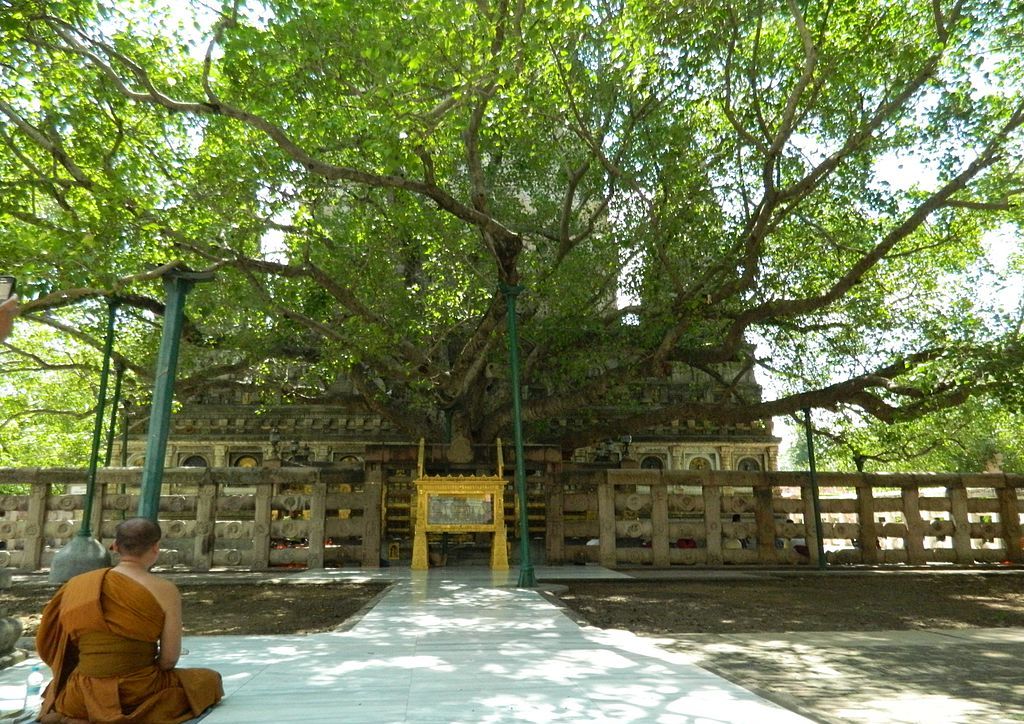
Do you know about the Bo tree or the Fig tree that stands there as a living testimony of Bodh’s enlightenment?
Here a little about it from us. Of course, the tree’s history is recorded, but we tell you a story here, about this living monument, and you must read it.
One day while moving around in the forest, Buddha was busy solving the puzzles of life; he sat down under a tree, tired, in a contemplative stage. Soon, he fell asleep, and when he woke up, he felt good, somehow refreshed. He looked up to notice the tree and when he took a good look at it, he knew what it was- A Fig tree or a Bo tree or a Peepal tree. Scientists call it by the name of Ficus religiosa from the Moracea family.
He smiled back at the tree and the Gods sitting on the tree actually blessed his growth and enlightenment. According to Hindu beliefs, a Peepal tree is full of divine creatures. This is also the reason why Peepal trees are not kept at home. They somehow prevent the growth of humans in a direction desired by them.
But, then he was Buddha, the unsuspecting One, and the non-superstitious One, so happy he felt in its company that he decided to spend seven complete days under it.
Two thousand years later, Emperor Ashok found the tree and decorated it, paid homage to it night and day, held festivals in its honor in the month of Kattika (last half of November and the first half of December). It is believed Buddha attained enlightenment on 8th December, celebrated as the Bodhi day among Buddhists.
But then, the tree did not stand as green and tall. People always had an illogical side, and a tree did not get spared from humans’ irrational, senseless wrath.
- Tissarakha, queen of Ashok, destroyed it the first time with Mandu (poison) thorns. She was jealous of his husband’s insurmountable devotion towards the tree.
- King Pushyamitra Sunga chopped it down again in the 2nd century BC after it had grown back again miraculously.
It was then in 236 BC that Princess Sanghamitra, daughter of Emperor Asoka carried the southern branch of the Mahabodhi tree to Sri Lanka. Devanampiya Tissa planted the tree and recorded its date in history and it still stands as the oldest living planted tree.
The tree faced storms, elephant attacks which it survived. Vandals attacked the tree, hacking down a branch in 1929 and then again in 1985 by the Tamil Tiger, who also hacked down 146 Sinhalese Buddhists.
Once you have enjoyed the coolness of the Bodhi tree, you can now wander out of the temple complex to witness other marvels in Bodhgaya. The Mahabodhi tree shreds leaves, and if a leaf is shredded on you, do not forget to take it home.
Other BodhGaya temple marvels
1) The Royal Bhutan Monastery
Built by the Royals of Bhutan to respect Lord Buddha, the temple is built in a typical Bhutanese style. A 7-feet tall image of the Buddha stands in the middle of the temple and is surrounded by ornate images and fresco paintings. The monastery also houses a 15 room guesthouse for monks that can be used for resting.
You can visit it for free as the temple is open from 7 AM to 12 PM and again from 02:00 PM to 05:00 PM.
2) The Great Buddha at BodhGaya
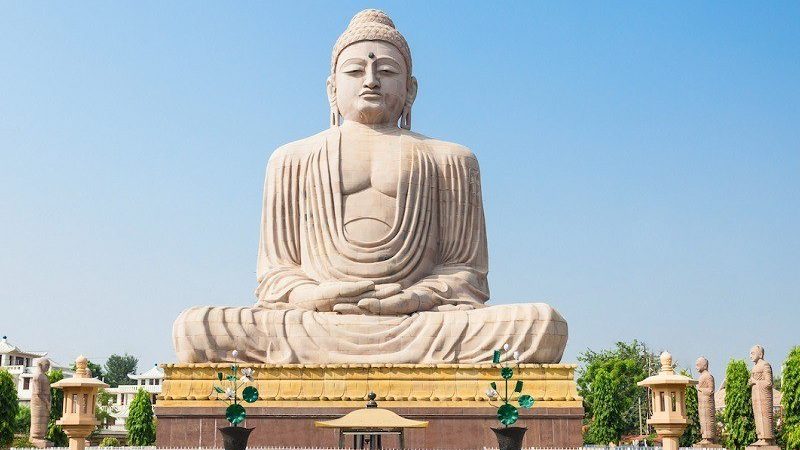
It is a towering 80 feet Buddha consecrated by none other than the 14th Dalai Lama in 1989. Built of sandstone, the status took seven years and 12000 stonemasons to complete.
3) Daijokyo Buddhist temple
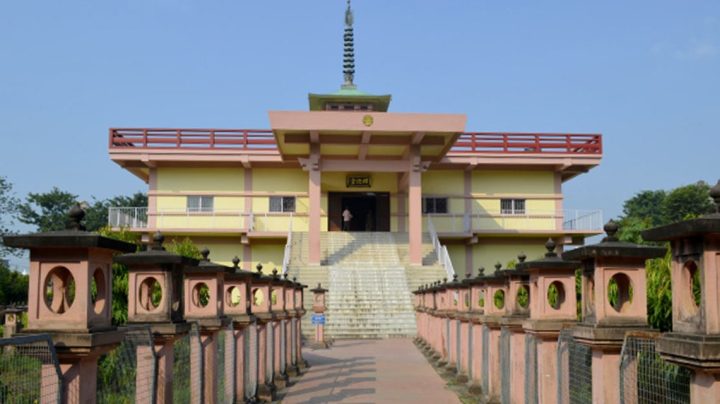
Built with bright portraits from the Jatakas, the temple interiors tell you a tale. You can actually sit there long to soak the positive vibes of the temple.
4) Burmese Vihar Monatery
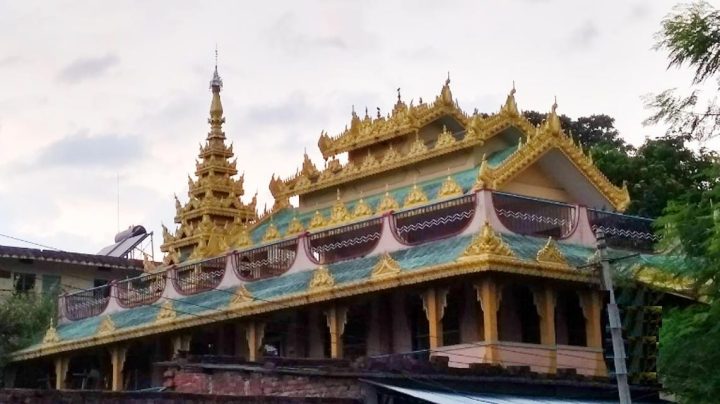
Its flying saucer like rooftop is one of its kind in Bodhgaya. Replete with Burmese culture and beliefs, the temple talks about their devotion to Him.
5) Vietnamese Temple
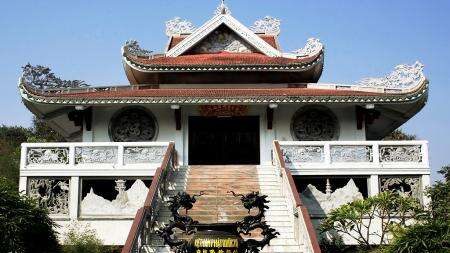
Built in 2002, the temple represents the Buddhist beliefs and practices of Vietnam. The Avalokiteshvara statue and the carvings and architecture of the temple are worth watching.
6) Indosan Nippon Japanese Temple
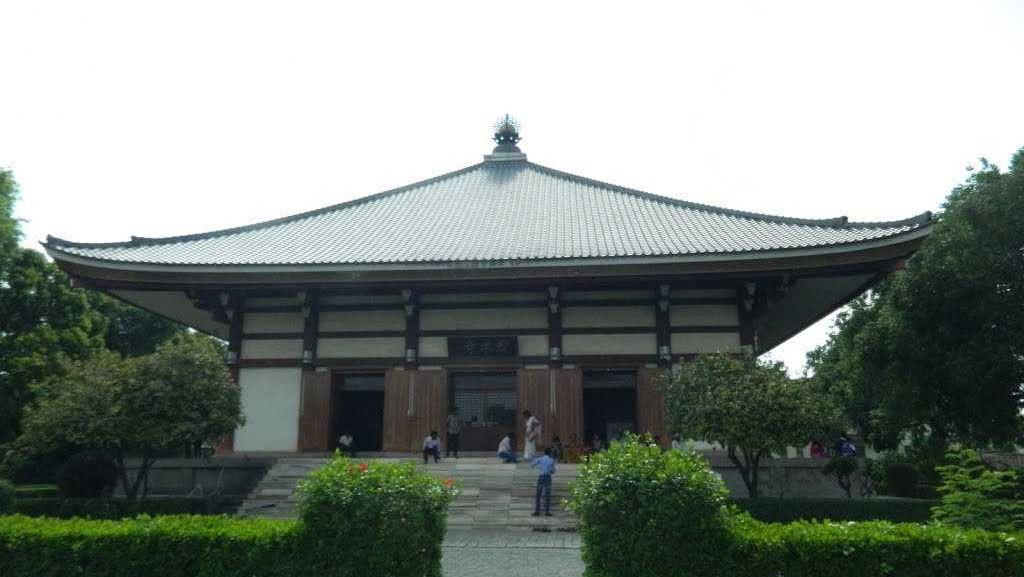
Built in 1972, the temple is sculpted of woods. Wooden carvings and the stark simplicity of the temple might scare you or might inspire your reverence.
7) Chinese Temple
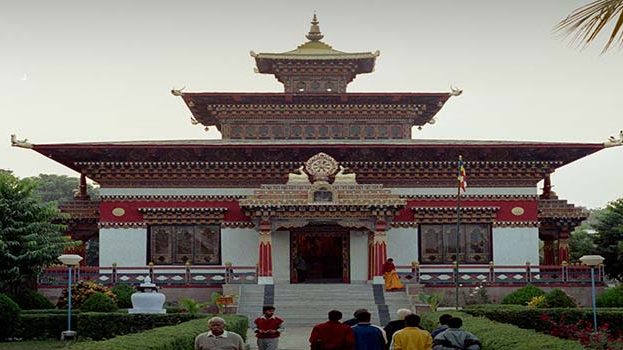
Three golden statues of Buddha sit as the primary attraction of the temple.
8) Thai Monastery
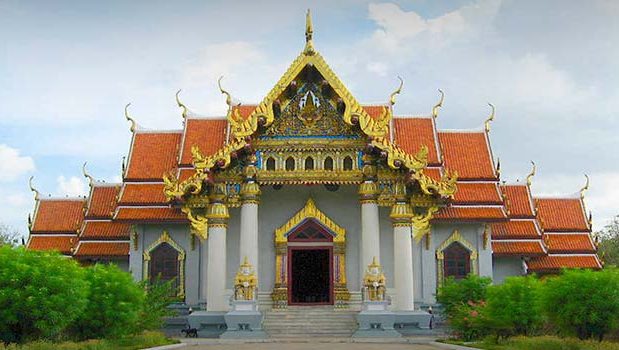
The Thai monastery was built by the Monarch of Thailand when requested by the then Prime Minister of India, Pandit Jawaharlal Nehru.
Thai architecture, sloping roofs, curved at ends is beautiful to watch.
This is all about it. This was my journey. Hope you enjoy reading it!
 TheScientificTriangle
You must be logged in to post a comment.