TheScientificTriangle
What about the environment and science
AromaRich: Know How An Emerging Aromatherapy Brand From The Himalayas Work Wonders On You?

Aromatherapy brands are mushrooming everywhere nowadays; however, getting your hands on quality products can always pose a challenge. What if I told you that an aromatherapy brand called AromaRich exists in a small Himalayan village that crafts handmade products with attention to detail? Let’s get to know them from this article.
My sister introduced me to essential oils when she handed me gift-wrapped lavender-scented candles one Christmas. Memories of childhood immediately flooded through my entire consciousness as soon as I inhaled the wafting fragrance of lavender.
This year, on a trip to the winter capital of Himachal Pradesh – Dharamshala, I came across a beautiful range of aromatherapy products in an eco-friendly book cafe – The Fat Teapot.
I had been in search of a good body scrub made up of natural ingredients for days, and suddenly a jar of Pink Himalayan Salt Scrub with Dried Rose Petals on one of the shelves in the cafe caught my attention.
The sight made me gleeful like a child. But wait, there were more – handmade soaps with essential oils wrapped in colourful kerchiefs, clay aromaspheres, and lip scrubs. These belonged to an emerging home-grown aromatherapy brand called AromaRich nestled in the Himalayas.
Overjoyed, I purchased a few of them, and that’s how this story on AromaRich happened. Keep reading to know how this aromatherapy brand evolved in the Himalayas and how are they contributing to improving your wellbeing.
What is aromatherapy?
There are plenty of ways to define the term “aromatherapy,” but to put simply – aromatherapy is the art of using aromatic substances extracted from plant parts called essential oils that can stimulate your brain via the sense of smell to influence your mood and physical wellbeing positively.
What is meant by essential oils?
Essential oils are compounds obtained from various plant parts. They are rich in molecules bearing the natural aroma or essence of the plant. Essential oils owe their characteristic essence to these aromatic compounds.
Extracted through the process of steam distillation, cold pressing (manual method), or solvent extraction, essential oils are prepared by combining the concentrated plant extract with another carrier oil to make a stable product suitable for use.
There are more than 90 essential oils that are widely used. Aromatherapy is the broadest area of application for aromatherapy oils.
How aromatherapy works scientifically?

Inhalation and topical application are the two chief ways in which essential oils are used.
According to experts, aromatherapy is believed to activate the olfactory/smell receptors in the nose that further transmits a chemical signal to the brain through the olfactory nerves.
The molecules of the essential oil act by activating the limbic system which is also regarded as the emotion processing centre of the brain. Furthermore, it is also believed to impact the hypothalamus that produces serotonin – the body’s natural key to happiness.
Aromatherapy uses

Introducing an emerging aromatherapy brand – “AromaRich – Natural Living Aromatherapy”

After having basic background information on aromatherapy, let’s jump back to where we started – discovering an upcoming aromatherapy brand called AromaRich.
AromaRich, a range of aromatherapy products crafted for healing, wellness, and happiness came into existence in 2018 when Richa Shah decided to launch her entrepreneurial venture.
Having a background in psychology, she understands how the human psyche functions, how our moods get impacted in various ways, and how it can be altered for good with the help of essential oils.
During our interaction, she also added that a couple of years ago she came across an article that provided insight on the presence of heavy amounts of chemicals in bath and body products. Although the popular brands in the market are FDA compliant and are deemed fit for use yet realisation dawned upon her that when we buy bath and body products we often miss checking their composition.
This sparked a curiosity within her and also inspired her to see if she can develop a range of all natural bath & body products. She then dedicated herself completely to finding more about aromatherapy oils and also started learning about making formulations suitable for everyday use. Not only this, but she also gained a couple of certifications in Aromatherapy from reputed institutions.
She has also been using essential oils personally for a prolonged period and that has naturally made her aware of the properties of oils that can benefit humans in various ways.
AromaRich Product Line
Born in the Himalayan village of Banouru, Dharamshala, Himachal Pradesh, AromaRich is an aromatherapy brand that uses 100% natural ingredients to formulate its products.
Free from sulphates, parabens, SLS, mineral oils, and palm oil, the products contain only natural herbs and clays for imparting colour and plant-based essential oils for imparting the requisite fragrance and therapeutic benefits. She uses turmeric for yellow colour, charcoal for black colour, similarly, green clay & spirulina for the colour green, and so on.
The only and slightest exception arises in the case of soap bars as they need to be hardened with substances like lye/sodium hydroxide.
AromaRich’s range of products includes the following:
Customised Products
While interacting with Richa about AromaRich’s product line, we learnt that customization of products is a key offering of this aromatherapy brand. This is what makes her proud about AromaRich that she can incorporate a customer’s preference into her products. At times, she can end up making a completely new product or a new version of an existing product as per the customer’s preference.
So, the USP of AromaRich lies in not being a one-stop solution for all customers but rather in becoming a unique aromatherapy brand that focuses on making each of its products offer a one-of-a-kind experience.
Bath & Body Products
These include soap bars, body and face scrubs, body oils, and more.
Soap Bars

Soap bars are formulated with essential oils to give a relaxing bathing experience. They are available in 65 gms and 100 gms eco-friendly fabric packaging.
Face, Body, & Face Scrubs

The body scrubs are made special with Himalayan Salts, dried flowers, other plant parts, and essential oils.
Adding Himalayan Salts to your bathing ritual can not only relax and calm you but can also enhance the quality of sleep, ease body aches, deliver magnesium to the body, treat certain skin conditions, and even soothe insect bites.
Face & Body Oils

Natural face oils and body oils can nourish your skin in all seasons.
Lip Balms & Lip Scrubs
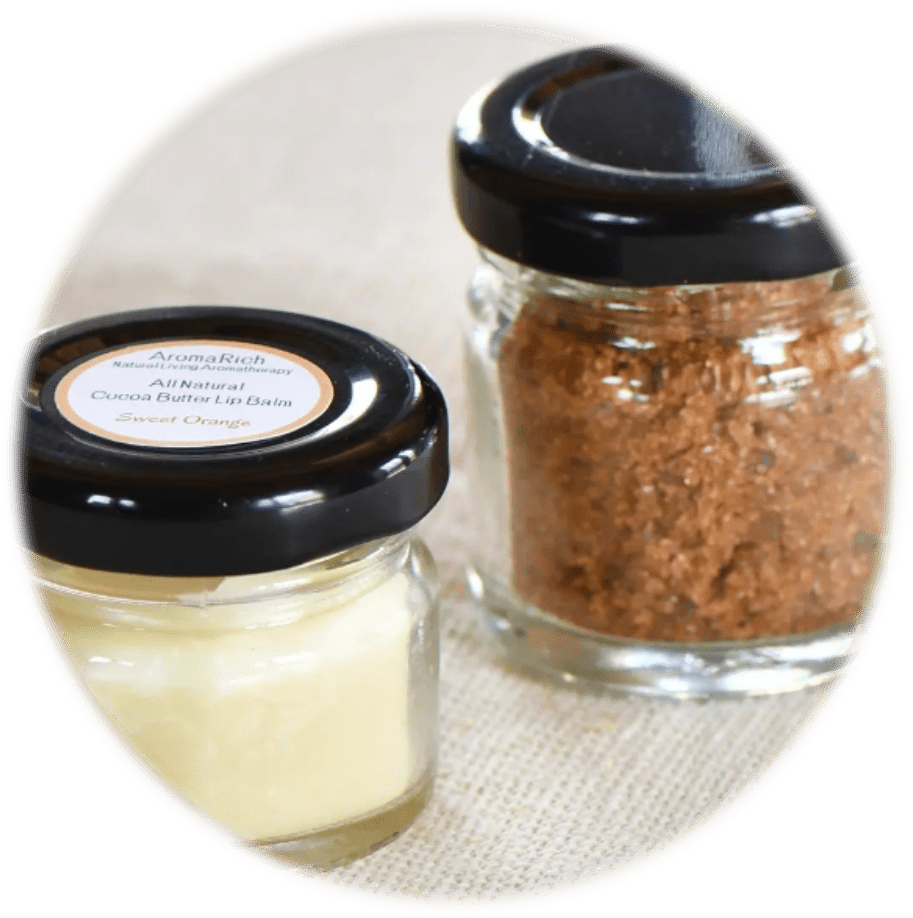
Lip scrubs and lip balm duo can be the ultimate thing to complete your lip care routine.
Body Butters

You can keep away brutal winters from making your skin chapped and dry with these body butters.
Essential Oils & Essential Oil Blends

If you love essential oils then you can incorporate them in your daily life such as by pouring them into diffusers, using them for aromatherapy massages, steam inhalation, bathing, and more.
For Home & Office Use
Candles, incense sticks and cones can keep your home or office aerial environment clean and fragrant.
Candles & Soywax Melts

Nature Inspired Aromatherapy Candles 
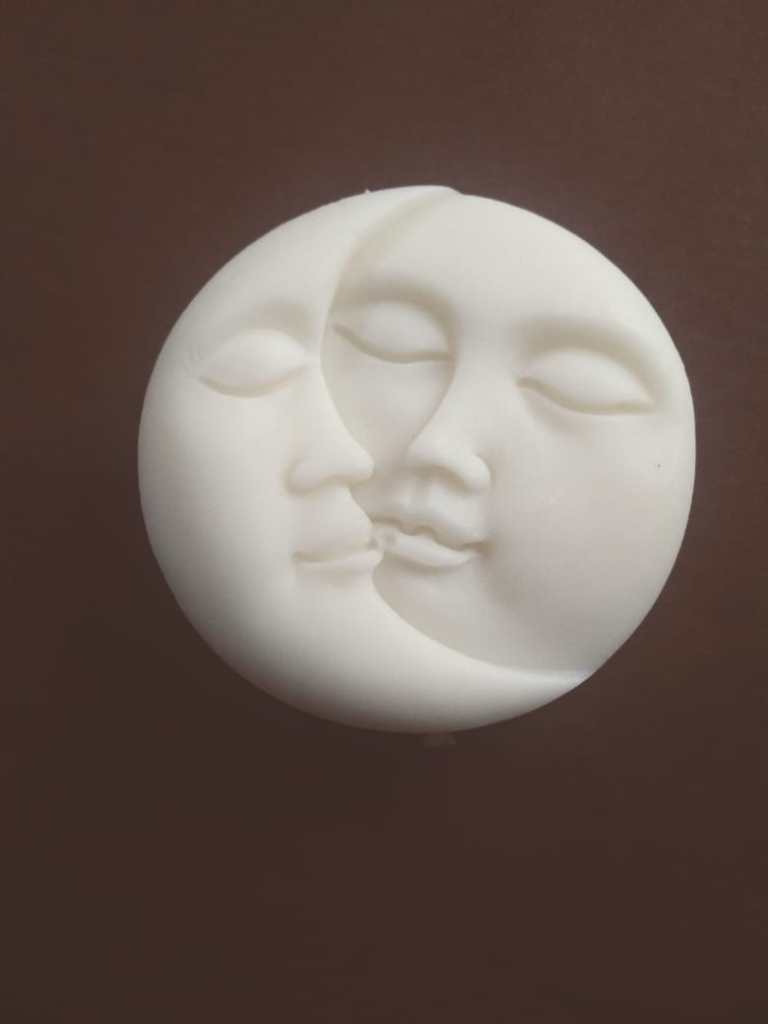


Aromatherapy candles are nothing but a bundle of joy. Available in different designs, shapes, and sizes, these cute candles can be perfectly customized and make perfect gifts for loved ones.
Aroma Clayspheres

Clay aromaspheres are a new kind of fragrance diffuser or air fresheners made with terracotta. These can be kept in compact spaces like purses, drawers, cupboards, or hung in cars. Just a few drops of your favourite essential oil added to the sphere can leave a mild wafting fragrance once it is absorbed by the claysphere.
Incense Cones

Incense cones with essential oils can be used anytime and anywhere to lighten and purify the environment.
Know more about this aromatherapy brand from the Q&A
Gain more insights on AromaRich from our conversation with Richa.
How do your products help better lives in the days when pollution and chemicals rule the world?
AromaRich’s products are plant-based; therefore, contain the goodness of nature combined with the piousness of the Himalayas. Our products are hand-made in small batches to impart adequate quality to each product. The therapeutic benefits of essential oils are another plus of using AromaRich products.
Another thing that makes AromaRich products stand out is the customisation that we offer to the clientele to give them a memorable customer experience. If someone needs essential oils for sleeping or something to calm them or has any other specific requirements, then our job is to formulate a product with the requested essential oil to help them improve their wellbeing.
Tell us a bit about a few of your most popular products.
Most of our customised products have been loved by our clients. Apart from that among the lot that is sent to the stores, such as the Geranium, Lemongrass & Charcoal Soap Bars were also liked by people of all age groups. I think most people have an affinity for the aroma of lemongrass and the addition of geranium further enhances the fragrance profile of this product.
The other things that are quite in demand are the Bath & Body Scrubs, Lip Balm with Cocoa Butter & Sweet Orange, and during the winters the demand for Whipped Coconut & Shea Body Butter also spikes.
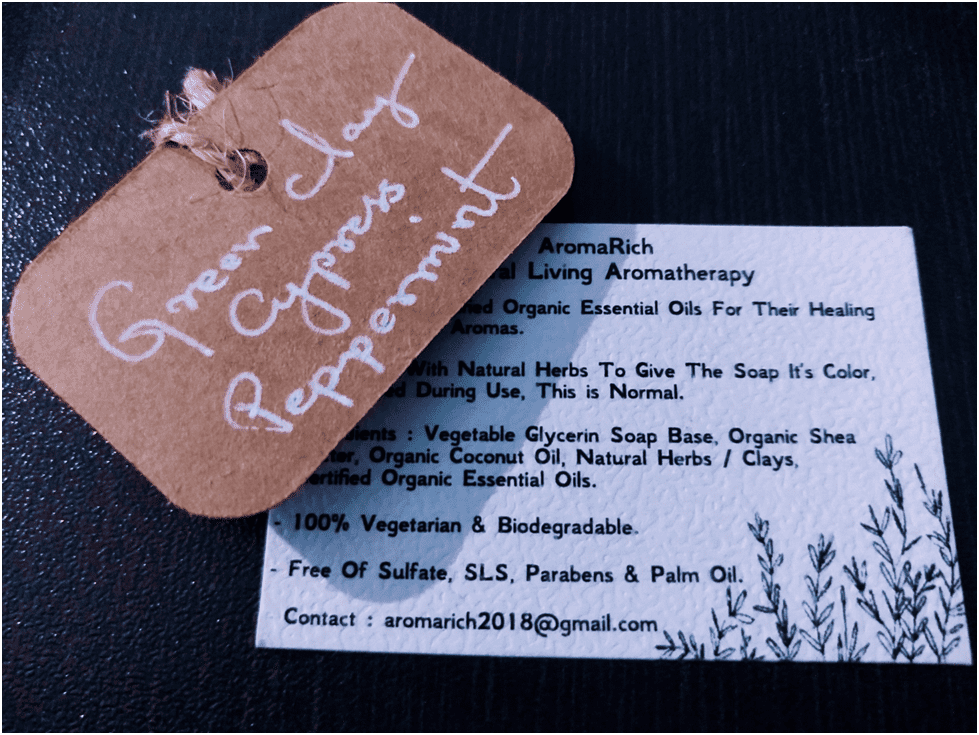
Green Clay, Cypress, and Peppermint Soap Bar is my favourite as it keeps my body refreshed and fragrant even hours after a bath.
How do you make your products eco-friendly?
We support sustainable living and ecological conservation, and are an environment-conscious aromatherapy brand.
First and foremost, sourcing the raw materials from ethical vendors remains my top priority so that I can ensure that we are never taking anything from nature which is endangered or critically available. We only use raw materials that are abundantly available and can be sourced ethically.
The next preference goes to utilising glass jars, amber-coloured vials, and recyclable fabric packaging for the soaps. However, we need to use a film wrap for the soaps to prevent the action of moisture.
We also reuse bubble wraps from our vendors if we are shipping something far as we do ship our products all across the country. For nearby deliveries, we use paper bags.
Where are your products available? How can people reach you?

Sharlho – Mcleodganj
The Fat Teapot Cafe – Rakkar
My Earth Store – Sidhbari Road

AromaRich IG handle
How do essential oils help? Do you also make people aware of the way they must use essential oils when they buy your products?
Essential oils can rejuvenate you, heal you, and also purify your home’s aerial environment. They can be used as inhalers, for steam distillation, in diffusers, or for a bath.
Yes, we do make people aware of the benefits of using essential oils and also issue safety instructions & precautions regarding their effective use.
- First and foremost, it is important to always dilute essential oils in carrier oils like coconut oil, sweet almond oil, or sesame oil before using them. Direct use of essential oil is not recommended by experts because it can irritate the skin if used topically or sensitive people can experience rhinitis or allergies if they are used via the route of inhalation.
- It is also advisable to use only a few drops of essential oils in the diffuser as essential oils are potent and only a drop can create a lasting aroma. The concept of using more is irrelevant with essential oils, in fact, a small amount often does magic.
- If essential oils are used in a diffuser, then they should do this in well-ventilated rooms or areas.
- Special measures should be taken while using essential oils around pets, children, or pregnant women. Also, if someone has a history of allergies or some other health concern especially related to the respiratory or skin organs then it is a must to check with a clinician before letting them use essential oils or using essential oils in their presence.
What is your vision with AromaRich?
I wish to promote an eclectic approach toward living among people. I want my aromatherapy brand to reach people who want to have a holistic experience with aromatherapy and essential oils, especially if it makes them feel rejuvenated or used for healing purposes.
This year my goal is to introduce soy wax candles and incense cones as well as incense sticks.
Did You Know?
Why is it so important to check the Latin or Botanical Name of the Essential Oils you buy?
You may have noticed that the Latin Name for each plant is listed for every essential oil. It definitely should be noted on the bottle of the essential oil or the vendor should always have a list of oils along with the Botanical Names mentioned. If not, do question the vendor or the company and ask them.
– This is important as it identifies the exact type of Essential Oil in your bottle.
– A Latin or Botanical Name, is the most precise way of identifying a particular plant.
– Many plants have several species. For instance, Lavender has many different species, eg: Lavandula angustifolia or Lavandula latifolia.
– Each species of Lavender has different aromas and therapeutic qualities. To know which Essential Oil is in the bottle, it is important to ask.
Final Note
Aromatherapy is an ancient branch of phytotherapy; however, the sprouting of commercial aromatherapy brands has seen a rise in the past few decades. AromaRich is an indigenous brand that is adding value to its product line by offering customisation and making hand-made products. Furthermore, they are also shipping their products in eco-friendly packages all across the country. If you are in the area for a trip or wish to de-stress yourself, then you can try out their products by ordering them right away or stopping by the locations mentioned above.
Aromatherapy Associated FAQs
1. What is meant by aromatherapy?
According to the National Association for Holistic Aromatherapy (NAHA), aromatherapy refers to the therapeutic use of naturally occurring aromatic substances known as essential oils to heal a condition.
2. What is the difference between essential oils and aromatherapy?
Essential oils refer to the essence obtained from volatile active ingredients of aromatic plant parts like flowers, herbs, roots, stems, seeds, and more.
Aromatherapy refers to the holistic approach used to heal certain conditions by employing essential oils that have proven therapeutic benefits.
3. Does aromatherapy work for stress?
Yes, essential oil like lavender is regarded as effective to de-stress and treat anxiety in people.
4. How do essential oils help with different areas/profiles?
Different essential oils have different kinds of effects:
Essential oil for cooling – Peppermint, Vetiver
Warming effect – Ginger, Cinnamon
Uplifting moods – Sweet Orange, Pink Grapefruit
Calming effect – Lavender, Sage
Grounding – Vetiver, Patchouli
Images: Simple Psychology, Instagram page of AromaRich
Also Read: Zizira Explorers

Vaccine to Prevent Cervical Cancer in India Developed Indigenously Ready for December Launch

Vaccine to prevent cervical cancer in India can now make HPV curable and preventable.
Breast cancer is still the number one killer disease in women only to be succeeded by cervical cancer in our country. Across the world, cervical cancer is the fourth most common cause of fatality. Almost 1/4th of the global cervical cancer death rate is found in India. Out of the 1, 25,000 estimated cervical cancer diagnoses, almost 75000 deaths occur from the disease.
Startlingly, almost all cervical cancers are linked to HPV infection occurrence. A solid 83% of all invasive cervical cancers are occurring due to HPV 16 & 18 strains. Thus, this is the reason why HPV vaccine to prevent cervical cancer in India is seen as a promising development toward controlling cervical cancer.
The launch of a vaccine to prevent cervical cancer in India was recently announced to prevent the occurrence of cervical cancer in women induced by the Human Papilloma Virus (HPV).
The first indigenous quadrivalent Human Papillomavirus Infection (qHPV) that goes by the name of Ceravac is a joint initiative between Department of Biotechnology and the Serum Institute of India.
Using this vaccine to prevent cervical cancer in India can bring down cervical cancer -related deaths substantially.
Interesting points about vaccine to prevent cervical cancer in India
- Serum Institute of India (SII) pledges to complete one crore doses in India.
- The vaccine is built to target the very high risk HPV strains 16 and 18.
- The vaccine will be present on the surface of the virus.
- Protein growth is made to take place under lab conditions in yeast cells.
- Ceravac will be a VLP vaccine that will act by making antibodies against the L1 protein of the virus.
- The virus lacks the HPV genetic material and hence will not be able to cause cancer itself.
- The cervical cancer vaccine cost in India is somewhere between ₹200 – ₹400 ($2.51 – $5.02).
- SII (Serum Institute of India) gained approval from DGCI (Drugs Controller General of India) to indigenously develop and market HPV vaccine in India.
Facts to know about HPV infection
If you want to know how you can develop HPV, the answer is simple.
- Those who use sex toys might get an infection from sharing sex toys.
- Genital area skin-to-skin contact is a prime factor in getting HPV infection.
- Any sex form- vaginal, oral or anal sex can transmit the virus.
Everyone is susceptible to HPV including women, trans-men, non-binary and intersex people.
But mere HPV infection will not cause cancer, instead, prolonged HPV infection will. Almost 10% have a chronic HPV infection that lasts long in them.
- Another factor worth considering is the type of HPV that infected the target individual.
| Low-risk HPV | Mostly responsible for causing warts | It has nothing to do with cancer |
| High-risk HPV | HPV 31, 33, 35, 39, 45, 51, 52, 56, 58, 59, 66, and the 68th variants | Can cause cancer |
| Very high-risk HPV | HPV 16 and 18 | Most prominent cancer-causing viruses |
A few facts are mentioned below to understand and weigh the disease’s risk -benefit ratio of the.
| Most people are infected with HPV within months of becoming sexually active. |
| These people often get infected with the high-risk HPV type. |
| The virus will affect both men and women |
| All HPV infections will not cause cancer |
| Your immune system is strong enough to regulate the HPV infection |
| Persistent high-risk HPV infection can lead to cancer |
| Vaccination, proper diagnosis and treatment can prevent or cure cancer |
Other reasons for developing cervical cancer
- Younger people below 45 years are more susceptible to cervical cancer.
- People suffering from AIDS or HIV with weakened immunity can develop the disease.
- Multiple childbirth or early age birth can also be the cause of cervical cancer.
- If the mother took diethylstilbestrol (DES) during the birth of her child will lead to cervical cancer in the child.
- People with past history of bladder, renal, vaginal, or vulvar cancer can be susceptible to cervical cancer later.
Cancer types caused by HPV
| Type of cancer | Location in the body |
| Cervical Cancer | Cervix |
| Vaginal cancer | Vagina |
| Vulvar Cancer | Vulva |
| Penile Cancer | Penis |
| Anal Cancer | Anus |
The mode in which HPV leads to cervical cancer
- The prime way of infection is through overexpression of E6/E7 oncoproteins.
- E6/E7 oncoproteins will impact the tumor suppressor genes.
- The primary ones regulated are cell cycle regulating tumour suppressor genes.
- Alters downstream pathways (cell growth, proliferation, differentiation and apoptosis) causing cancer.
Thus, a vaccine to prevent cervical cancer in India from HPV is the best way to deal with it.
Wrapping Lines
The vaccine to prevent cervical cancer in India is the only way to control HPV and an indirect way to bring down the cervical cancer rate in India and the world. Ceravac will be administered in all age groups with 2 doses planned for 9-14-year-olds and 3 doses for 15-26-year-old people. Given the high susceptibility of the virus and its contagious nature, HPV is one of the most dreaded of all viruses.
Currently two vaccines for cervical cancer are available in India from US-based pharmaceutical companies; one is a quadrivalent vaccine by Merck available at ₹2,800 ($35.16) per dose and another is a bivalent vaccine called Cervarix from GSK at ₹3,299 ($41.43) per dose. The home-grown vaccine will make the vaccine affordable for the general masses.
Also Read: Zizira Explorers

NFT in Healthcare (12 Game-Changing Applications in 2024)

NFT in healthcare – is it even possible? Did you think that NFTs were limited only to the art and gaming industry? Read this blog to know how they can revolutionize the future of the healthcare industry, what’s the take of medical ethicists on this, and more.
Imagine a scenario where you visit a clinic to seek relief from a headache that the usual OTC drug is failing to cure. Wouldn’t big pharma benefit from this information and be able to design a stronger pill to cure headache? Yes, they would, but in this, we as patients lack control over our data. What if a novel technological approach lets you become the master of your patient data? Wouldn’t you prefer that rather?
Do you know that non-fungible tokens can make this happen?
NFTs are an emerging technological trend that have gained prominence mostly in the field of art, digital content, music, and online gaming items so far. But did you know that NFTs could play a pivotal role in different areas of the healthcare industry too.
That being said are you aware that the healthcare industry deals with a humungous amount of patient data every day? About 1.2 billion clinical documents are generated in the U.S. alone.
So, NFTs offer a novel way of managing patient data and other things in different spheres of the healthcare industry. Let’s explore more about eight new application opportunities for NFT in healthcare below.
Features of healthcare NFTs making them useful for this sector
NFTs have evolved from smart contracts and most of its features are derived from the blockchain to which they belong. Before we take a look at the applications of NFT in healthcare, let’s take a look at its unique characteristics.
- Data uniqueness – NFT tokens are are unique cryptocurrency assets. It means that they can’t be modified, deleted, substituted, subdivided, traded or replicated.
- Data ownership – Each unique NFT is owned by the one who mints it. The ownership information is permanently retained on the blockchain and cannot be fabricated in any way.
- Verifiability – Since all transaction details are stored on the blockchain, therefore, the minting, transferring, and burning of NFTs are transparent and verifiable.
- Tokenisation and Monetisation –NFTs provide a provision to transform physical assets into digital assets; thereby, facilitating its trading and monetization.
- Extensibility – This feature enables a combination of two or more NFTs to give rise to another completely new and unique NFT token.
- Selling online– NFT can be sold and bought from different online available marketplaces.
12 novel applications of NFT in healthcare
Non-fungible tokens can have numerous applications in the field of medical science and the pharma industry. Let’s take a look at eight new applications of NFTs in this compilation.
1. Patient data NFTs
With the coming of smart wearables and numerous fitness apps, our health data is lying everywhere. Also, whenever, we visit hospitals, clinics, or pathological labs, our health data is electronically collected and stored on their local servers. As AI and big data are expanding at an unprecedented rate; drug manufacturers, researchers, and genome sequencing companies are heavily relying upon patient health information.
However, this kind of PHI (Protected Health Information) is often subject to exchange and trade without the concerned patient’s consent or even knowledge.
Thus, a team of scholars led by bioethicists at Baylor College of Medicine recently proposed linking sensitive patient data to NFTs. The advantage of doing this is that smart contracts would allow patients to gain digital ownership over their health data. Also, it would allow them to track their data with the help of a unique identification code. Further, they can link their de-identified data to other platforms and sell it to third parties as per their terms and conditions.
Aimedis is a one-of-a-kind, blockchain-based healthcare platform, founded in 2017. They were the first to introduce a medical data marketplace in 2021. They also created the first NFTs containing the electrocardiogram data of cardiac patients.
2. Genomics data management
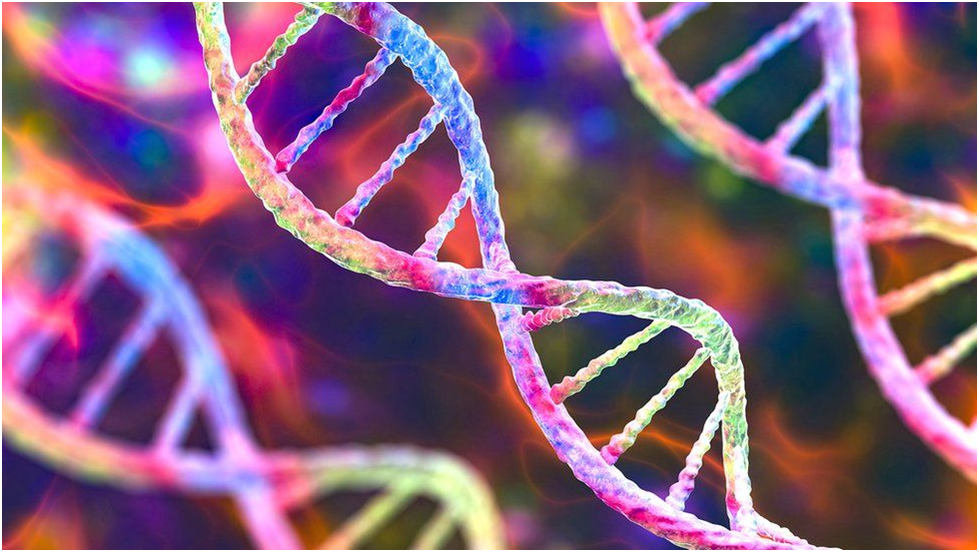
The field of genomics is expanding exponentially and it is estimated that 2 billion human genomes can be sequenced by 2025. However, this field too involves dealing with an individual’s data and is subjected to exploitation. Since genomic data exists for a longer span of time, patients having ownership over it is crucial.
Thus, this is another application opportunity for NFT in healthcare. An article by Ahmad Musamih, et al, in the IEEE Consumer Electronics Magazine, proposes the conversion of an individual’s genomic data into an NFT token. It can ensure sole ownership over the NFT by an individual, thereby eliminating the scope of fabrication. It would also enable transaction tracking, further ensuring verifiability and data provenance. Additionally, individuals can also gain a scope to monetise their genomic data.
3. Supply chain management
When the Covid-19 pandemic was at its peak in 2020, the global healthcare supply chain failed catastrophically to meet the demand for basic healthcare materials, medical equipment, PPEs, ICUs, ventilators, and even hand-sanitisers. Such a massive crash points toward an ineffectual and opaque system.
This not only threatens patient safety but also points toward a big loophole for the introduction of counterfeit medical equipment and medications. According to a report by Statista, the global counterfeit drug market is valued at $200 billion.
Furthermore, the lack of transparency and traceability makes it even easier for the people involved in the supply chain escape accountability.
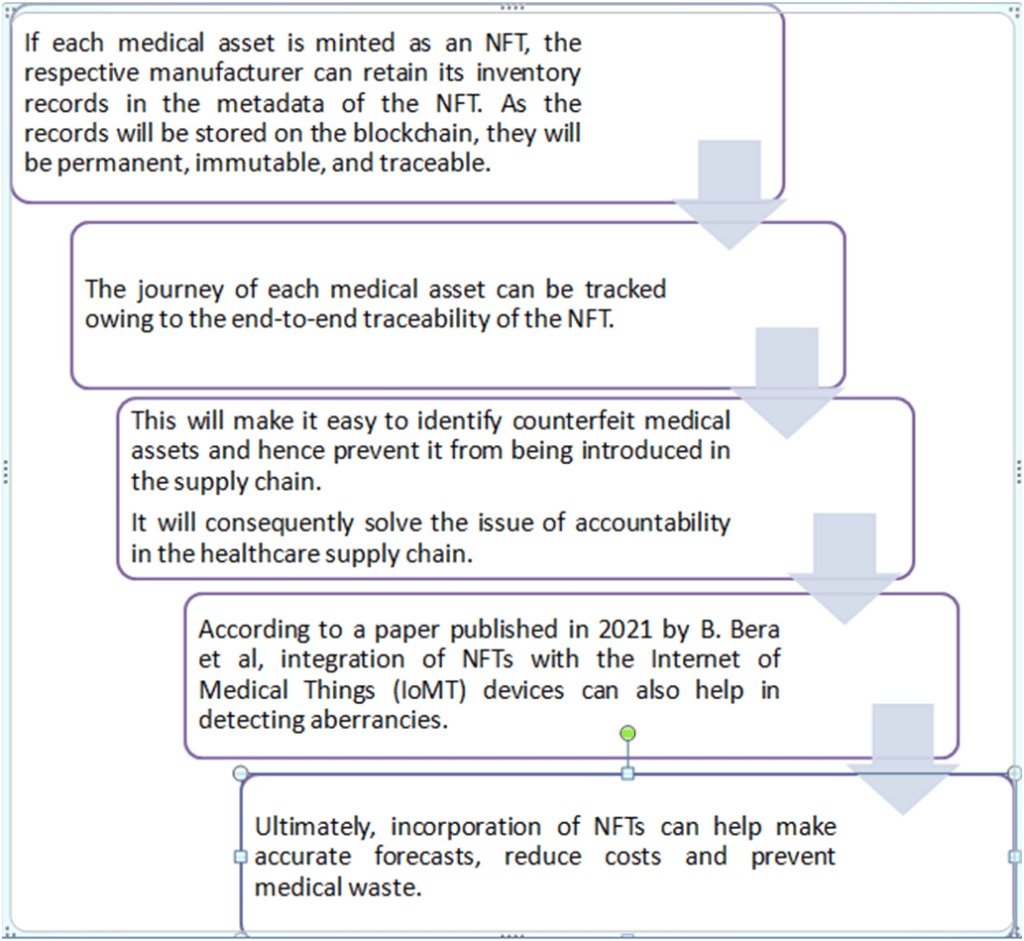
Therefore, this provides a remarkable opportunity of using NFTs in healthcare. Here’s how it will benefit:
4. Tokenized blood

According to WHO, there are about 118.54 million blood donations collected globally. But do you ever get to know the journey of the donated blood from the camp to the end recipient?
This would be achievable with non-fungible tokens and would be an exemplary use of NFTs in healthcare. Blood donation organisations can mark each donor’s blood with a specific NFT token. This would help them track the blood on the blockchain from the camp to the blood bank or hospital. Further, it can even be traced to its end recipient.
Alternatively, blood donation organisations can register the donated blood into a digital blood bank. This would facilitate people in need of blood transfusions to easily search for their required blood type. It would also ensure faster delivery of blood and help save people’s lives.
5. Patent Protection

Intellectual property theft is common in the form of patent thefts. This is due to the reason that the process of patent registration involves publishing the patent details and designs publicly.
A research paper published by Samer Barakat, et al, proposes the use of non-fungible tokens for protecting patents. Organizations and individuals can immensely benefit from an NFT blockchain patent protection system. Healthcare NFTs and pharma NFTs can make a significant impact on the patent laws with the minting of patents as NFTs.
For each patent, if the system generates a non-fungible token and deposits the patent hash on the Ethereum blockchain network with a digital timestamp, it will be easy to verify who filed for the patent first.
6. Creation of digital twins
A digital twin may be defined as the virtual copy of a physical asset. Digital twins often provide useful insights into how to optimise a tangible asset. NFTs can help produce digital twins of medical assets by tokenising them. The digital twin can record all activities of the medical assets on the blockchain and prove the authenticity and immutability of its data.
One use case could be employing a digital twin to model a patient’s organs via smart wearables and plantable devices that the patient uses. The digital twin can help customise treatment plans and also curate a medicine intake chart for the patients.
Healthcare providers can utilize the digital twin to run customised simulations to figure out the most appropriate treatment plan for each patient instead of depending on the generalised trial results. As the patient will own the digital twin, they can ultimately have sole ownership over the data.
7. Clinical trial management
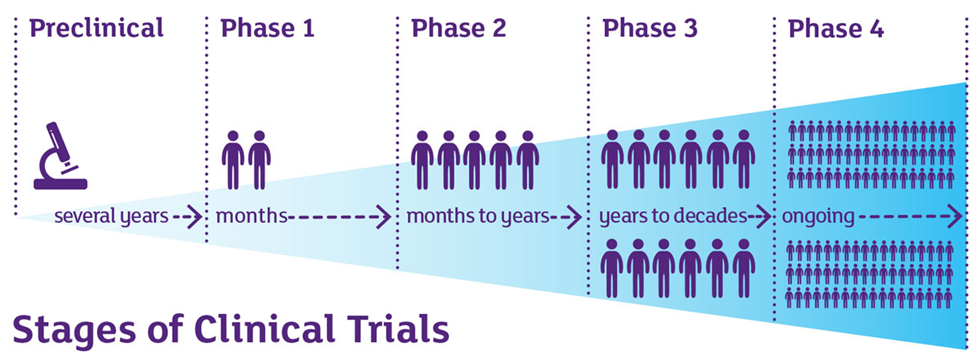
Conducting effective clinical trials faces two major obstacles, one is lack of transparency and another is the lengthy, tedious, old-school method of documentation.
How could one mitigate these challenges?
The answer lies in employing pharma NFTs. Converting each participant’s trial process into an NFT token can maintain a record of their consent on the blockchain and prevent manipulation. Plus, NFTs can present an opportunity to incentivize trials, thereby encouraging their consensual participation. Ultimately, it can save a lot of time and money.
8. Creation of decentralized knowledge base
Another research paper by Kopp A.M., et al, proposes an innovative solution to preserve the intellectual property of an organisation such as their practical solutions, models, guidelines, SOPs, and blueprints. This would not only facilitate knowledge sharing within and outside an organisation conveniently but also help retain ownership over it, thereby facilitating its authentic usage.
The digital assets of any organisation could be tokenised and stored on a decentralised database based on a blockchain network. This would ensure that the digital assets are fully traceable.
9. Health equity and NFT in healthcare
A ledger that’s decentralized and immutable is allowing people greater monetary freedom. Why is it a strong contender for health equity?
- With greater access to wealth and guaranteed transparent transactions, they allow every nation to access a safe, transnational network.
- Unique in allowing investors from all walks of life and different cultures to participate in it.
- Global health coverage can be promoted while we still struggle to keep up with our insurance coverage only within a single nation.
- Cross border payments can become cheaper, safe and quiet faster.
- Smart contracts will prevent midway mismanagement of large fund transfers.
- Identity proof is a crisis for many when seeking healthcare. Blockchain technology will promote a secure identity that is easily portable from one place to another.
- Homeless people can store their documents safely and can visit pop-up clinics for different purposes, including health, social, and other areas.
10. Minting health data by patients themselves
With NFTs in use, there will be increased provisions to sign informed consent with patients to mint health data collected for the patient during treatment as an NFT.
In this way, they are in-charge of their data. It will also mean that only a patient will reserve the right to sell their data to any research organization for research purposes.
When it comes to the wearable technology industry, patients will need to have access to their data that they can use. It will determine the scope, duration, and utilization of the collected data, thereby facilitating the monetization of their data all by themselves. They can also help with product improvisation in the process through their data.
11. Optimization of hSCT (hematopoietic stem cell transplantation)
With NFTs in use, a donor will be capable of entering their ABO and HLA blood typing directly into the NFT. In this way, the information would be directly available to transplant centers.
Instead of using the prioritization list used currently, the transplant centers can directly match their data needs. Inventory management will become more effective and efficient through this process.
In this way, a transplant center’s dependency on the need to cryopreserve products will reduce significantly.
Even organ transplantation from dead donors can be effective in this regard. It is through an efficient ledger that inventory management can be streamlined in a desired way, saving time and improving efficiency.
12. Exchange of valuable ideas through NFTs
Every new idea that hits the world is not put to the right use. Many are lost in the process, and some of them don’t ever see the light of day.
Sharing ideas becomes easier with NFTs, and a NFT minting timestamp will protect the idea of the sharer from being stolen. Also, it would facilitate the sale of potential ideas if they became worthy of research when someone took an interest in them.
Challenges of using NFT in healthcare
Since NFTs in healthcare are in its nascent stages; therefore, it is still not perfect. The challenges associated with the incorporation of NFTs in the medical field and its possible solutions are enumerated below.
Vulnerabilities of smart contracts
The Problem: Smart contracts are susceptible to exploitation due to conflict between two smart contracts if they are not coded properly. This is because the NFT is based on smart contracts and the marketplace where it is traded also has its own smart contract.
Possible Solution: Use of oracle networks.
Seamless integration with existing legacy systems
The Problem: To maximise the utility of healthcare NFTs, they need to be designed robustly to ensure interoperability across different blockchains, IoMT, and other systems.
Possible Solution: Requires extensive testing and auditing.
Humongous storage requirements
The Problem: NFTs can congest the blockchains due to the pressure of the humongous amount of data stored on them. This can in turn increase the time of operation and consequently raise the transaction fees.
Possible Solution: Requires a specialised decentralised storage system.
Scalability challenges
The Problem: Blockchains already face the issue of scalability. Since smart contracts are hosted on the blockchain, they face the same challenge.
Possible Solution: Employing on-chain and off-chain scaling solutions.
Privacy concerns
The Problem: HIPAA and GDPR guidelines prevent storing and sharing of personal information of patients. NFTs must remain compliant with HIPAA and GDPR guidelines.
Possible Solution: Irreversible encryption.
Absence of regulatory framework
The Problem: Blockchains are decentralised, making it difficult for regulatory authorities to impose regulations on its applications.
Possible Solution: Implementation of regulatory standards.
Expensiveness
The Problem: Gas fees are charged for performing transactions and updating the blockchain. Gas fees have to be paid in the native currency of the blockchain on which the NFT is hosted. Gas fees can’t be predicted as it is influenced by the congestion on the blockchain.
Possible Solution: Using private blockchains.
Dearth of NFT technical experts
The Problem: The healthcare industry lacks NFT technical experts and blockchain developers.
Possible Solution: Conducting workshops, knowledge-transfer sessions, and implementation of pilot programs.
The Bottom Line
NFTs are a kind of technology that is helping the real world transcend into the virtual world. Besides being endorsed by Hollywood celebrities, they are also witnessing a surge in demand from commoners of late. A survey conducted in 2021 indicated that about 20% of adults in the US are inclined towards obtaining, investing, or trading NFTs.
The above-mentioned groundbreaking eight applications of NFTs in healthcare can transform the way the patient-care industry was functioning so far. Even medical ethicists favour the inclusion of NFTs in the healthcare sector.
Stay tuned for interesting updates.
FAQs – NFT in healthcare
What does NFT stand for?
NFT is an abbreviation for non-fungible tokens. Derived from smart contracts, these are digital certificates on the blockchain with unique identification codes and metadata.
How can NFTs transform health exchange information?
NFTs can empower patients to decide how their health data is handled by the health information exchange. This is because NFTs are on the blockchain making the transactions transparent and tamper-proof. Thus, patients can monetize their data easily with the help of NFTs and have more control over their data and also share it with their consent.
What are the top NFT tokens?
There are already a huge number of NFT tokens available in the digital assets market; however, there are a few top NFT tokens of all time like CryptoPunks, Bored Ape Yacht Club, and more.
Can NFTs be used in healthcare?
Yes, NFTs are an emerging concept in the healthcare industry. Even medical ethicists believe that NFTs can be useful for patients. To know more about the applications of NFTs in the medical field, read this blog post.

Snigdha
Snigdha is a technical content writer professionally with an academic background in pharmaceutical sciences. She took up content creation to explore her passion for writing.
For TST, she likes crafting content about space explorations, scientific and technical innovations, and raising awareness about climate.
In her spare time, she loves going on orophilous adventures, reading, and painting.
Science Behind Yoga – 10 Scientifically Proven Benefits

Is there science behind yoga? What is the science behind yoga mudras? If you are planning to join a yoga class but worrying about such questions, then this blog will answer your queries and eradicate your doubts.
Yoga is the journey of the self, through the self, to the self.
― The Bhagavad Gita
Yoga is one of the most ancient practices of awakening one’s spiritual energy, raising mental consciousness, and attaining physical fitness. The term ‘Yoga’ originates from the Sanskrit root word ‘Yuj’ which means ‘to unite.’ Yoga encompasses both physical and mental wellness which is why it is globally popular.
According to a forecast presented by AP News in 2020, the global market size of yoga is estimated to reach $66.2 billion by 2027 growing at a CAGR of 9.6%.
Today, yoga is popular across Northern and Southern Americas, Asia, Australia, and Europe. But time and again innumerable people have wished to know if there is any science behind yoga.
So, here is a blog that will walk you down 10 scientifically proven benefits of yoga below.
History associated with yoga
Scholars believe that yoga originated at the dawn of civilization. According to legends, Shiva is believed to be the first Yogi of this world who propagated his knowledge to the Saptarishis. The seven sages further carried the yogic science to other parts of the world. Saptarishi Agastya propagated yoga across the Indian subcontinent and established the yogic way of life.
Further, in the pre-Vedic period (prior to 2700 B.C.), Maharshi Patanjali gave yoga a systematic and codified form.
During the classical period of yoga (500 BC – 800 A.D.), it gained popularity due to Mahavir, Buddha, and Ved Vyas’s Bhagavad Gita.
While in the post-classical era (800 A.D. – 1700 A.D.), Adi Shankaracharya, Ramanujacharya, Surdas, Tulsidas, Mirabai, and the Natha Yogis of Hathayoga Tradition like Matsyendaranath, Gorakhnath, and many more contributed towards yoga’s further proliferation.
In the modern period (1700 A.D. – 1900 A.D.), the popularisation of Bhakti Yoga and Hatha Yoga can be attributed to Ramakrishna Paramhamsa, Vivekananda, Ramana Maharshi, and Paramahansa Yogananda.
Contemporary times witnessed new dawn for yoga with the coming of Swami Shivananda, Sri Aurobindo, Acharya Rajanish, B.K.S. Iyengar, Maharishi Mahesh Yogi, and Swami Satyananda Saraswati.
In the latter half of the 20th century and the beginning of the 21st century, Sadhguru, Baba Ramdev, and Sri Sri Ravi Shankar became active advocates of yoga for the millennials and Gen Z.
Prime Minister of India, Mr Narendra Modi, first proposed to the UN General Assembly in 2014 to commemorate International Yoga Day. Recognizing its importance and universal appeal, the United Nations, thereby proclaimed June 21 (also the day of the summer solstice) as the International Day of Yoga to raise awareness about its benefits.
My journey with yoga:
Even though my father tried inculcating the habit of practising pranayama since adolescence, I would never be enthusiastic about it.
I would question him – “Does it really make a difference to you or are you just imagining it because someone on the TV or book says so?”
The doubts prevented me from doing pranayama regularly. I would find excuses to not sit with Dad for those “boring breathing sessions.” “What is the science behind pranayama,” I would often wonder.
So, I wasn’t a believer initially.
Then, what turned me towards it?
“Perhaps a greater divine source.”

My journey with yoga began in 2015 during a vacation in Rishikesh. Sitting along the banks of the Ganges in Parmarth Niketan Ashram, one afternoon, my eyes fell upon the gigantic statue of Shiva in a meditative pose. The pristine white statue of Shiva, heedless of the worldly illusions but conscious of himself sits on the Ganges, near the ghat of the Ashram. Nestled along the banks of the holy Ganges amidst the towering, lush Himalayas is the Parmarth Niketan Ashram which welcomes pilgrims from all across the world.

To this day, I remain unaware if it was the calmness of the Ashram or the serenity radiating from Shiva’s statue that led me to my tiny inner voice – “I too want to experience the consciousness in which Shiva is.”
So, I came back and started taking baby steps towards yoga. I also began researching to find if there is any scientific basis for yoga and here is my compilation.
10 benefits of yoga with scientific evidence
If you are planning to incorporate a basic yoga routine into your jam-packed schedule but are unable to understand where to start, then you could begin by understanding if there is any scientific rationale behind practising yoga asanas. Once you gain confidence in the process, all you need to do is wait for some time before you can talk about the benefits you experience for yourself.weight loss recipe
Reduces risk of atherosclerotic cardiovascular diseases

Atherosclerosis is the deposition of plaque consisting of fats, cholesterol, and other substances in the arterial walls. It either leads to the narrowing and blockade of arteries consequently causing reduced blood flow to the heart or else causes an explosion of the plaque leading to a blood clot.
When adults with cardiovascular disease risk factors, metabolic syndrome, type II diabetes, and coronary artery disease practised yoga, they showed improvements of various kinds. These include achieving a better body mass index (BMI), reduction of systolic blood pressure and cholesterol (both LDL and HDL).
The review by Chu, et al, is published in the European Journal of Preventive Cardiology. The 2016 meta-analysis of 32 RCTs with healthy adults and those with CVD risk factors or CAD successfully establishes the fact that yoga can prevent atherosclerotic cardiovascular diseases in adults. Also, a comparison between those who practised yoga regularly and those into other forms of exercise showed no difference in the results obtained.
Improves blood pressure
According to the World Health Organization, about 1.28 billion adults have hypertension in the age-range 30-79 years. Hypertension is one of the leading causes of premature mortality in the world today. Undetected or uncontrolled hypertension can damage three vital organs including the heart, brain, and kidneys besides impacting the blood vessels and retina.
In a 2019 systematic review and meta-analysis by Wu, et al, conducted on adults with hypertension, a meta-regression analysis was used to determine which element of yoga played an important role in the reduction of high blood pressure. Having a sample size of 3517 subjects, the study group included both high SBP and DBP patients.
Those with high systolic blood pressure benefitted more from different breathing techniques as they showed a decrease of -11.3 mmHg. However, the diastolic blood pressure group showed a reduction of -5.5 mmHg after practising meditation rigorously.
Health benefits to breast cancer survivors
According to World Health Organization, in 2020, about 2.3 million women were diagnosed with breast cancer. Those who undergo mastectomy and do not undergo a reconstructive surgery further might experience a series of complaints starting from chest stiffness, shoulder pain, lymphedema, numbness, formation of scar tissue, and posture problems further affecting the spine.
A phenomenological study with three focus groups each consisting of six breast cancer survivors was conducted and a semistructured interview guide was employed to interpret the study. The article by Puymbroeck, et al, was published in the American Journal of Health Promotion in 2013.
Participants after practising yoga responded that they experienced better physical, mental, and social health.
| Physical improvements | Improved mental health | Improved social health |
| Improved energy, strength, and sleep | Improved confidence | Participants developed a better body image |
| Better posture, balance, and flexibility | Help with stress management | Felt inspired by each other’s journey of survival. |
| Decline in chest stiffness |
Decreases severity of depression

About 280 million people have depression worldwide and 700,000 people die by suicide each year according to the World Health Organization. Social stigma and financial constraints further prevent around 75% of people from accessing effective therapy for depression.
A study reveals that yoga asanas and meditation can show moderate effects on decreasing the severity of depression. Another study from 2017 suggests that yoga can be considered an alternative therapy for depression.
Effective for anxiety
A quasi-experimental study conducted on 52 women showed a significant decrease in their depression, anxiety, and stress levels after 12 sessions of hatha yoga practice. As per a theory, meditation and yoga increase γ-aminobutyric acid levels in the thalamus which subsequently decreases stress levels.
Some studies have shown that yoga asanas can help with general anxiety disorders, PTSD (post-traumatic stress disorders), and panic disorders. However, there is a need for more conclusive evidence.
Improves bone health
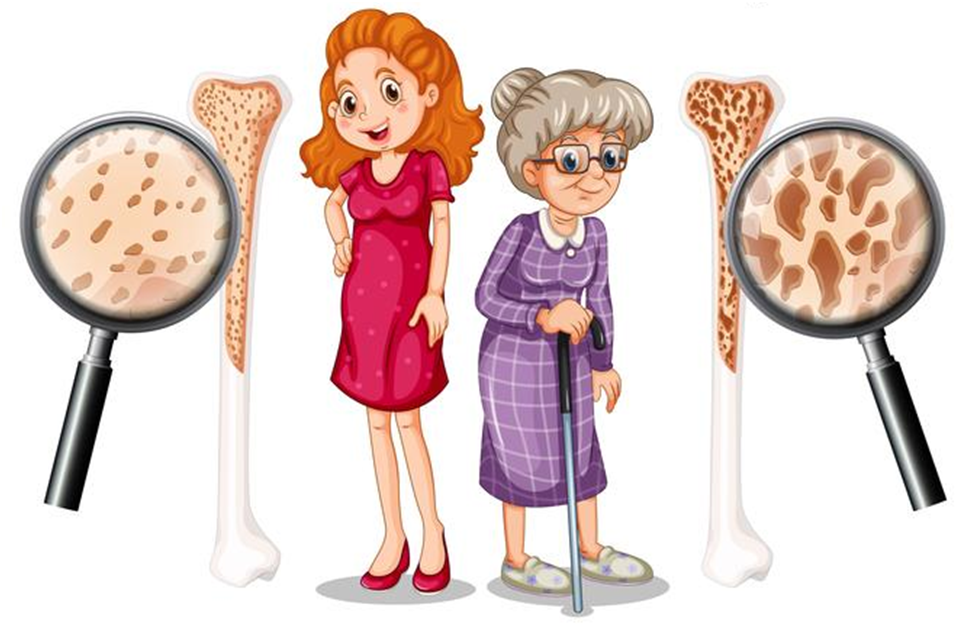
Evidence from several studies shows that yoga mudras increase bone density in patients with osteoporosis and osteopenia. Isometric contraction is the science behind restorative yoga that significantly improves bone health. Isometric contractions refer to the engagement of body muscles to hold a pose while keeping the length of the muscle static. Isometric poses prevent the shortening or lengthening of muscles but at the same time keep the joints flexed. This increases muscle and bone strength significantly.
In another study published in 2015, it was found that the bone mineral density increases in the hips, spine, and femur bone after practising yoga for over one year. More than 200 million people have osteoporosis or osteopenia worldwide. Thus, practising yoga offers a low-cost and low-risk alternative solution to people with osteoporosis.
Yoga and sleep
Shakespeare aptly describes sleep in his play – Macbeth
“Sleep that knits up the ravelled sleeve of care,
Balm of hurt minds, great nature’s second course.”

55% of yoga practitioners reported sleeping better after practising yoga. Yoga nidra science reduces stress levels and sleep disturbances.
Women in menopause who suffer from anxiety, depression, and insomnia also benefit from yoga. Yoga effectively improves the quality of sleep for women in menopause.
In another paper published in the Indian Journal of Psychiatry, the benefits of yoga can be observed among elderly people who suffer from insomnia and sleep disturbances. Regular practice of yoga is found to enhance their sleep quality.
Facilitates weight loss without burnout

Aerobic exercises and weightlifting aren’t the only ways to lose weight. A study was last year conducted by a team of researchers from the University of Pittsburgh, the University of Zurich, and the Duke University Medical Center to evaluate the effectiveness of yoga in losing weight. The article was published in the journal – Obesity.
50 obese and overweight adults participated in a 6-month weight-loss program comprising two groups. One group employed the science behind restorative yoga and the other group tried the more vigorous vinyasa yoga. Individuals of both groups demonstrated a significant amount of weight loss and cardiorespiratory improvement.
Decreases backache

Globally, the treatment costs for back pain generate about $100 billion in revenue each year. It is also the most prevalent cause of years lived with disability.
Yoga asanas can reduce back pain. The scientific basis of yoga for healing back ache is found in a 2019 meta-analysis of 13 RCTs by Zou, et al, which demonstrates that basic yoga stretches decrease the intensity of back pain.
Helps with inflammation reduction

A systematic review published in December 2018 analyzed over 15 studies to establish that regular practice of yoga reduces the inflammatory biomarkers. Thus, it can help decrease inflammation associated with several chronic conditions like arthritis, Crohn’s disease, diabetes, cardiac conditions, and many others.
A roundup on the science behind yoga
For those of you who thought that performing yoga is just limited to practising a few asanas, mudras and focusing upon one’s breath, let me tell you that it is much more than that. Yoga is indeed a way of life. Exhibiting basic humane values form the basis of Yoga Sadhana.
The above-mentioned scientific evidence proves that even though yoga and Ayurveda science are ancient disciplines emerging primarily from the Indian subcontinent, it doesn’t stand apart from modern science. Rather it is fully aligned with what modern science says.
Practising yoga can keep you mentally and physically fit in more than one ways. It can heal day-to-day problems and also help with chronic conditions. The best part of practising yoga daily is that it keeps you in shape and prevents you from falling sick frequently. Therefore, if you wish to de-stress yourself, attain fitness, or awaken your spirituality, you can find a class in your locality or register for an online class today.
Snigdha
Snigdha is a technical content writer professionally with an academic background in pharmaceutical sciences. She took up content creation to explore her passion for writing.
For TST, she likes crafting content about space explorations, scientific and technical innovations, and raising awareness about climate.
In her spare time, she loves going on orophilous adventures, reading, and painting.
Is The Earth Spinning Faster – Are We Doomed?
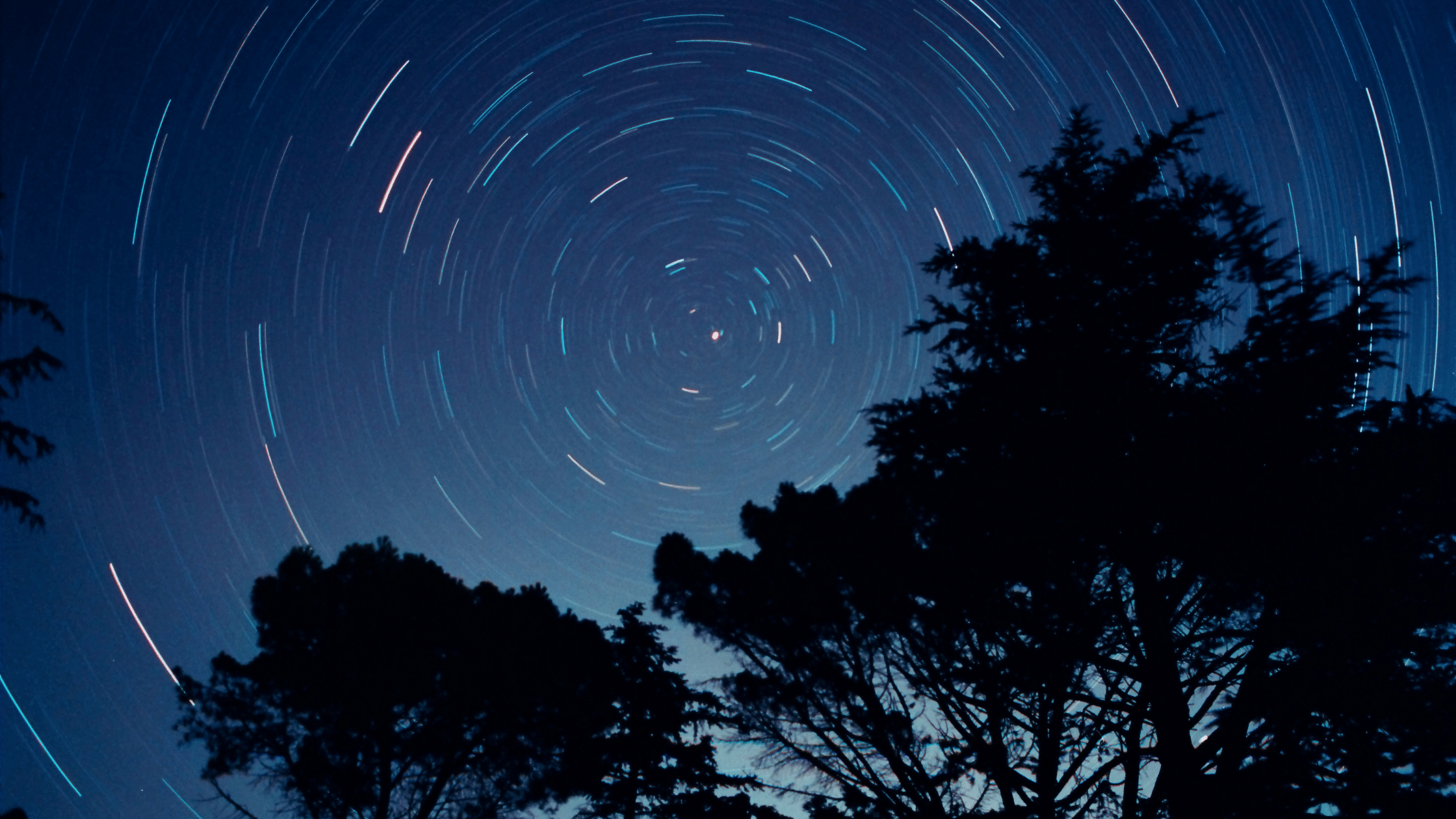
Is the Earth spinning faster? Did we just complete a day on Earth in less than 24 hours?
On June 29, 2022, our home planet reportedly completed rotating around its star in 1.59 milliseconds less than 24 hours. The quickest rotation of Earth around the Sun on July 29 was preceded by another shorter day recorded on July 26th when the Earth completed its day in 1.50 milliseconds less than 24 hours.
This is not the first time though that the Earth finished one rotation faster than what was measured and considered a standard time of rotation earlier. In 2020 too, Earth recorded its shortest 28 days since 1960. July 19, 2020, was also designated as the shortest day of that year as per observations made by scientists, as Earth had completed its rotation about 1.47 milliseconds lesser than 24 hours.
But wasn’t it earlier observed that Earth was slowing down? What about the ‘leap seconds?’
Since 1973, atomic clocks have been measuring Earth’s rotation time to be slowing down. The International Earth Rotation and Reference Systems Service (IERS) was making up for the slower rotation by adding leap seconds. This was probably deduced to be the impact of the Moon’s gravitational force.
Interesting Engineering (IE), a news outlet shared that we might be entering a phase of 50 years where we will experience shorter days.
So, what happened suddenly that could have led to Earth’s faster spinning? Let’s unravel its causes and possible consequences below.
Why is the Earth spinning faster?
Although at the moment there is no conclusive evidence regarding why is the Earth speeding up, some theories as per scientists are laid out below:
- One reason why Earth is spinning faster could be related to some seismic activity.
- As per some other claims, the reduction of the weight of the poles due to the melting of polar ice caps and glaciers could be another possible reason for this sudden change.
- Another reason could be that the molten core of the planet is moving over time.
- “Chandler wobble” could be another reason behind the faster rotations of Earth. Chandler wobble or Chandler variation refers to a minor deviation in the Earth’s axis of rotation relative to the solid earth. Discovered in 1891 by American astronomer Seth Carlo Chandler, this wobble amounts to a change of about 9 metres at the juncture where the axis intersects the Earth’s surface.
Scientists Christian Bizouard, Leonid Zotov, and Nikolay Sidorenkov described this wobble as a small quiver that can be observed when a top gains speed or slows down.
What are its immediate implications?
Now that you have some idea about why is the Earth spinning faster, let’s take a look at the possible consequences of Earth’s hastened rotation.
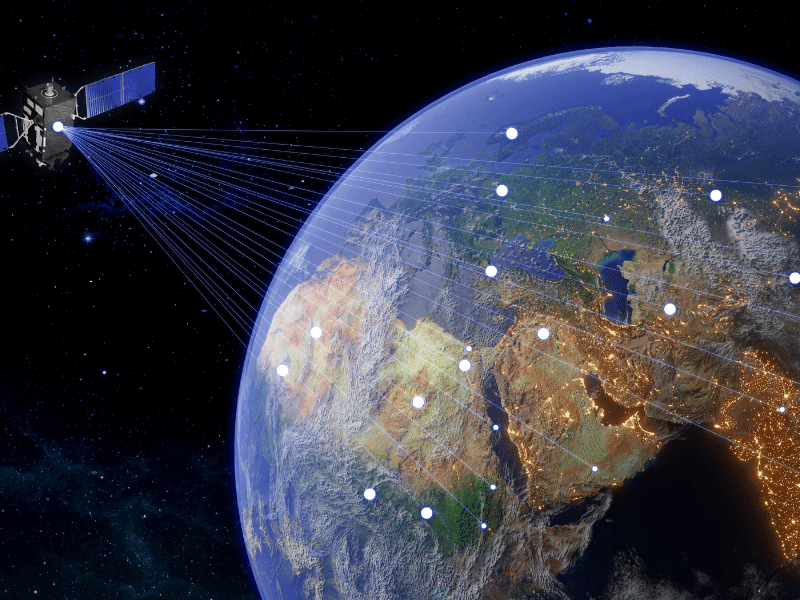
- Faster rotations of Earth could render GPS satellites useless. Wondering why? Well, this could be because the variation in Earth’s rotation remains unaccounted for in the atomic clocks of GPS satellites. A half-millisecond change in Earth’s rotation equates to about 10-inches or 26 centimeters space variation at the Earth’s equator. Global Positioning System satellites go around the Earth two times a day. Also, they have to be corrected for Einstein’s general theory of relativity. So, they would malfunction if such rotational changes continue to arise on a day-to-day basis.
- This would call for the inclusion of negative leap seconds or drop seconds in the atomic clocks by international timekeepers to solve the problem for GPS satellites.
- Usually, a clock progresses from 23:59:59 to 23:59:60 before resetting itself at 00:00:00. The drop in seconds while the Earth rotates faster would cause the clocks to change directly from 23:59:58 to 00:00:00. This would further confuse smartphones, computers, and communications systems and make them useless as they are synchronized with Network Time Protocol (NTP). Thereby, it would end-up corrupting the data due to improper timestamps on data storage and ultimately crash programs.
Some bizarre facts about time
- Time zones don’t run in straight lines.
- Some countries don’t split their time zones while some countries and continents around them do so.
- Some countries set their clocks forward or backward to conserve or expand daylight during summer and winters. DST is used by 70 nations across the globe.
- Daylight saving time will be made permanent from 2023 onwards in the United States under the Sunshine Protection Act which would end the need to change the clocks twice a year.
- The islands of Samao, Tonga and Tokelau across the date line are 13 hours ahead of London. While Line Island is 14 hours ahead of London.
- The Prime Meridian or Greenwich Meridian is the zero-degree longitude line that passes through the Royal Observatory, Greenwich, London, England.
- GMT is the Greenwich Mean Time which is the time at the zero-degree longitude.
- Earlier one second used to be defined as 1/86,400 of the length of the day. However, Earth’s rotation is not perfect. A day is, in fact, 23 hours 56 minutes and 4.0916 seconds long.
- 1972 onwards, atomic clocks in more than 50 countries were considered to be the absolute measurers of time. They are so accurate that they take about 31.7 million years to lose a second.
- The strontium atomic clock is the most accurate in the world which is placed at the National Institute of Standards in Colorado, United States. It measures the vibrations of a single atom of mercury and will lose a second only in a billion years.
- Planck time is the shortest moment of time which is 0.0000000000000000000000000000000000000000001 second as per quantum theory.
- Time passes quickly at Mt. Everest than it does at sea level. Einstein’s theory of relativity states that the closer one is to Earth, the slower the time runs for them.
Conclusion
Before the scientific community reaches any final inference on why is the Earth spinning faster, more data is needed to evaluate the causes and come up with precise solutions. Until then, keep watching this space for more updates from the world of climate, space, technology, and more. Subscribe to our newsletter and do drop your thoughts in the comments section.
Also Read: Why Do Blind People Wear Sunglasses – An Expert Take
Snigdha
Snigdha is a technical content writer professionally with an academic background in pharmaceutical sciences. She took up content creation to explore her passion for writing.
For TST, she likes crafting content about space explorations, scientific and technical innovations, and raising awareness about climate.
In her spare time, she loves going on orophilous adventures, reading, and painting.
Why Do Blind People Wear Sunglasses – An Expert Take

Why do blind people wear sunglasses? If this question has been on your mind for long, then know the medical reasons behind the same by sparing a few minutes to read this post.
According to WHO, about 2.2 billion people either have near or distant vision impairment. Most visually impaired people are above the age of 50 years. Uncorrected cataracts and unaddressed refractive errors are among the most prominent causes of vision impairment.
Ocular impairment from unaddressed myopia alone causes a financial burden of USD 244 billion. Ocular impairment can stem from a number of causes either associated with the eye or some disorder of the brain. As per the International Classification of Diseases 11, visual impairment can be predominantly classified into near vision impairment and distance vision impairment.
While walking down the streets, it is common to come across visually impaired people wearing sunglasses. People who have undergone cataract surgeries or are suffering from conjunctivitis also need to wear shades. It might pique your curiosity as to why they need to don shades. So, here are the scientific reasons that explain why do blind people wear sunglasses.
Ever wondered why blind individuals wear sunglasses? Read this article to understand the importance of privacy and regulating light for those with vision impairments.
Blind people wear sunglasses for a variety of reasons. While it might seem counterintuitive, as they have no sight, there are several ways that dark glasses can improve the quality of their lives and offer protection from the sun’s harmful UV rays. From providing privacy to regulating light sensitivity, here is why blind people wear sunglasses.
Explaining the Purpose of Wearing Sunglasses:
Wearing sunglasses has beneficial effects for the blind beyond just protection from UV rays. Sunglasses allow those with vision impairments to enjoy a greater sense of privacy and can help regulate light sensitivity. Dark glasses reduce glare, which is especially helpful if a visually impaired individual chooses to go outdoors, as bright sunlight can be particularly uncomfortable. Additionally, sunglasses add an extra visual cue to a blind person’s outfit, helping them better fit in with their sighted peers.
Types and Causes of vision impairment
There can be innumerable reasons that affect people’s vision and the spectrum of vision impairment is quite broad, differing from person to person at different stages of life. Starting from congenital abnormalities to accidents, injuries, exposure to toxic chemicals and diseases can lead to partial or complete loss of vision.
- Colour Blindness – This is a genetic disorder affecting mostly men and is characterized by the inability of people to perceive red and green colours and to also differentiate between different colour gradients.
- Night Blindness – Night blindness or Retinitis Pigmentosa is associated with the affected person’s loss of vision in low or dim lights. It can occur due to both genetic reasons and acquired reasons.
- Snow Blindness – This kind of temporary blindness is characterized by vision loss when exposed to ultraviolet rays. It happens due to the swelling of cells on the corneal surface.
- Congenital Blindness – Due to complications in pregnancy or some other reasons, the ocular organ doesn’t develop properly and can lead to complete vision impairment since childhood.
- Retinopathy of Prematurity – This occurs in babies born prematurely. It begins when blood vessels of the eye bleed causing scarring of the eye and retinal detachment.
- Acquired Blindness – Glaucoma, untreated cataract, age-related macular degeneration, Vitamin A deficiency, and vascular diseases associated with the retina or optic nerve are usually other leading causes of blindness. Besides this, diseases such as strokes, malignancies, hereditary diseases, chemical poisoning, accidents, and physical injuries to the brain or eye can also lead to visual impairment.
- Cerebral Visual Impairment – Cerebral/Cortical visual impairment causes visual impairment in children and is a brain-related disorder. CVI often coexists with another cause of visual impairment.. People with CVI have difficulty processing the eyes perception.
Why do blind people wear sunglasses – 5 must-know reasons
A stereotype associated with why do blind people wear sunglasses is that they try to hide their eyes. However, we will explore the scientific take behind why they need to wear sunglasses.
1. For vision improvement
As per the American Foundation for the Blind; legal blindness can be defined as the extent of vision loss that can determine someone’s eligibility to receive benefits. Clinical diagnosis of a 20/200 vision or less in the better-seeing eye or a visual field less than 20 degrees without moving the eyes side to side refers to legal blindness.
Most visually impaired people do not experience a total loss of vision and using sunglasses or special glasses enables them to see in a narrow zone (tunnel vision) and focus better.
2. Protection from UV rays
Whether a person is legally blind or has 20/20 vision, using sunglasses during the daytime and at the outdoors can protect the eyes from ultraviolet rays. This is because exposure to UV rays can lead to macular degeneration, photokeratitis, and pterygia. Thus, wearing dark-coloured glasses can protect the eyes.
Vision loss also might lead to photophobia, hence using shades can help prevent light sensitivity. Sunglasses also cut down the glare as glare is known to significantly reduce the visual field of a visually impaired person.
Sometimes, blind people also experience pain when exposed to bright light which is due to migraines that happen to people who lack photoreceptors – rods or cones. Therefore, wearing protective glasses can benefit visually impaired people in more than one way.
3. Protection from physical injuries
Sunglasses act as a physical barrier against sharp objects, dust, or other particles from entering the eyes of visually impaired people as it can consequently lead to injuries and infections. Injuries can be more harmful to people with legal blindness as it can worsen their eye condition.
4. To notify people about their condition
Another reason why do blind people wear sunglasses is to alert people in public places of their condition. People with vision impairment don shades and use a walking cane. This is great for their safety and also for the people around them.
5. For aesthetic reasons
Visually impaired people are often responsive to the varied sound frequencies around them. Thus, they may not be able to make constant eye contact with the people who are communicating with them. Hence wearing shades reduces the awkwardness and makes people be more at ease with them and vice-versa.
People who have been in accidents that led to their vision impairment might also have wound marks or disfigurations around their eyes. So, some may prefer covering their eyes with protective glasses.
7 Famous people who were visually impaired
- Homer, Greek poet
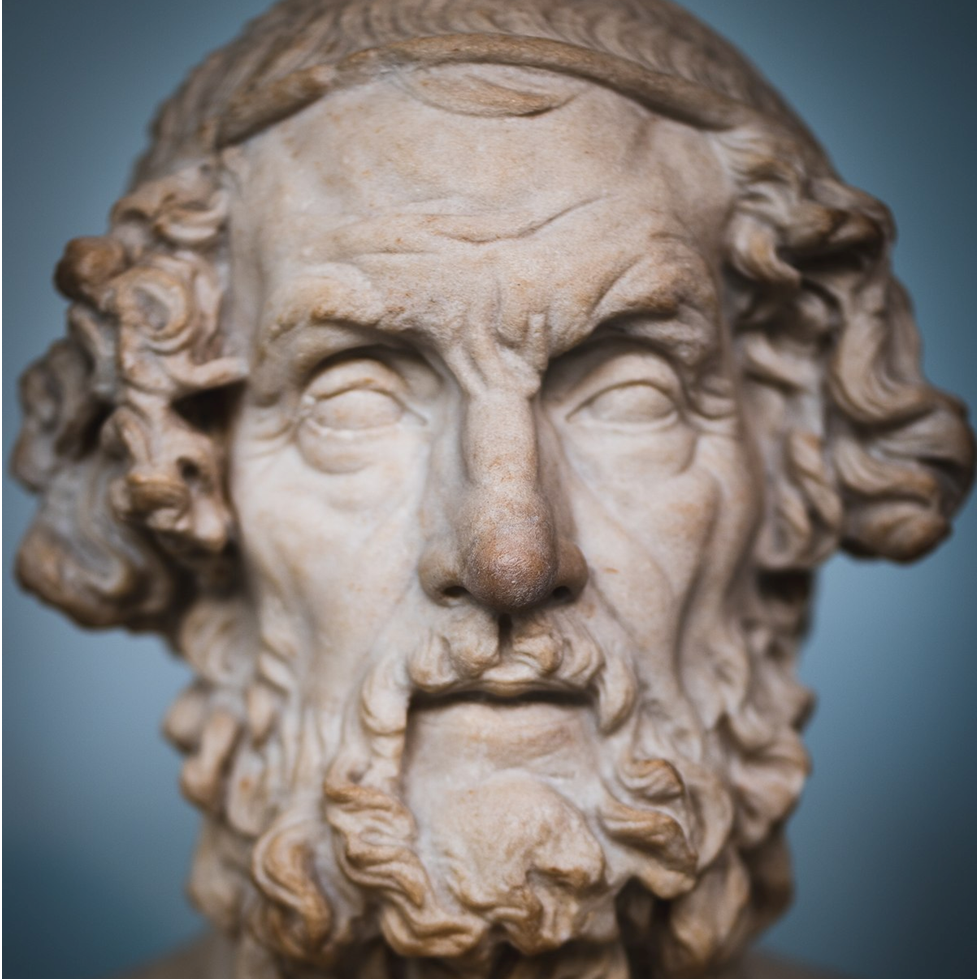
Author of epic poems like the Illiad and the Odyssey, Homer was also known to live with blindness.
- Galileo Galilei, Italian Astronomer, Physicist, Mathematician, and Philosopher (February 15, 1564 – January 8, 1642)
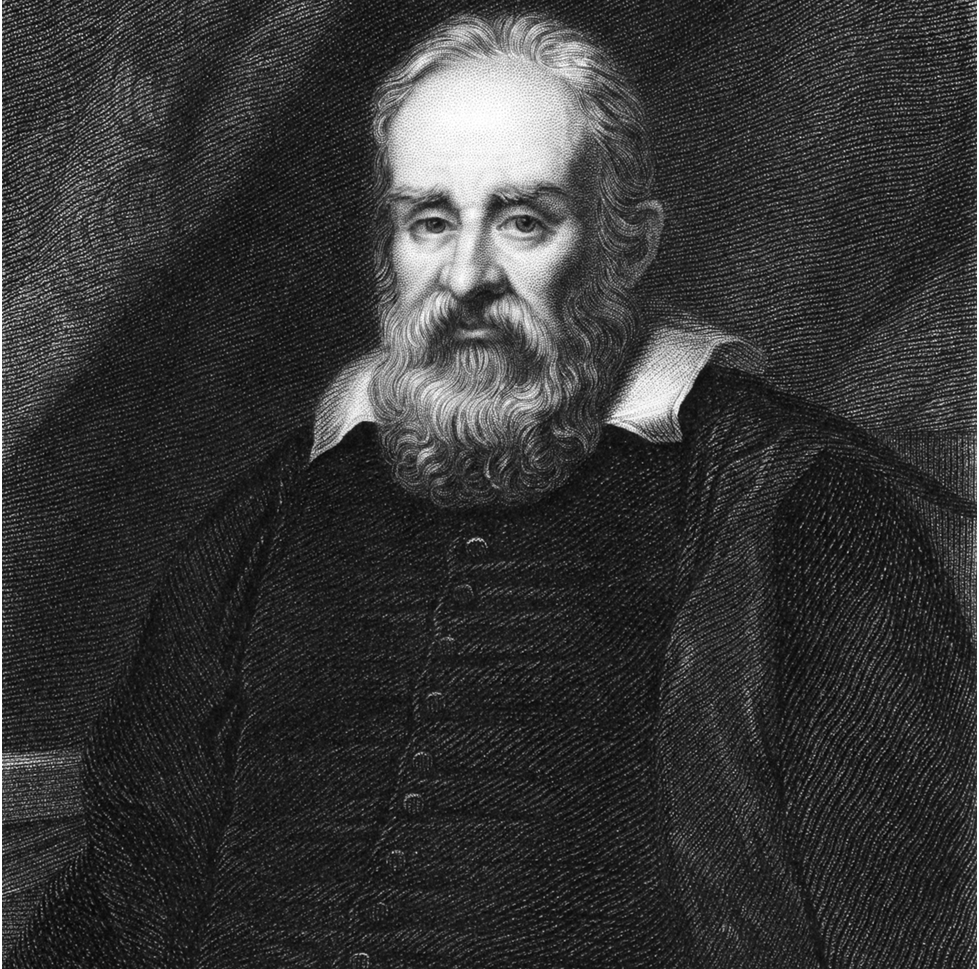
Highly acclaimed for making improvements to the telescope and discovering the four largest moons of Jupiter, Galileo’s vision impairment is related to age-related impairment.
- Louis Braille, French educator and inventor (January 4, 1809 – January 6, 1852)
He is known for inventing Braille to help blind people to read. Accidental self-stabbing in the eye with an awl lead to his blindness.
- Thomas Rhodes Armitage, British physician (April 2, 1824 – October 23, 1890)
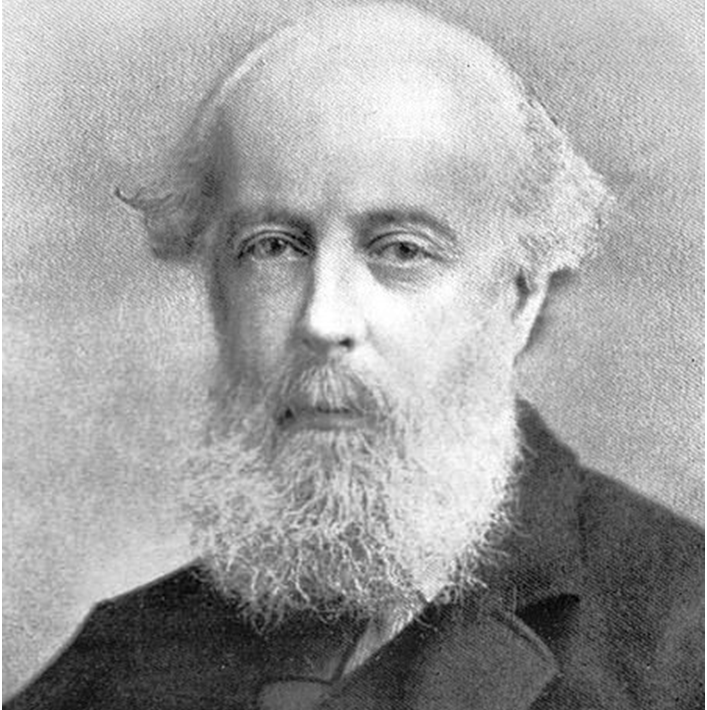
He founded the Royal National Institute of Blind People. He was a practicing physician who suffered from a deteriorating vision which eventually led to a total loss of vision.
- Joseph Pulitzer, Hungarian-American Publisher (April 10, 1847 – October 29, 1911)
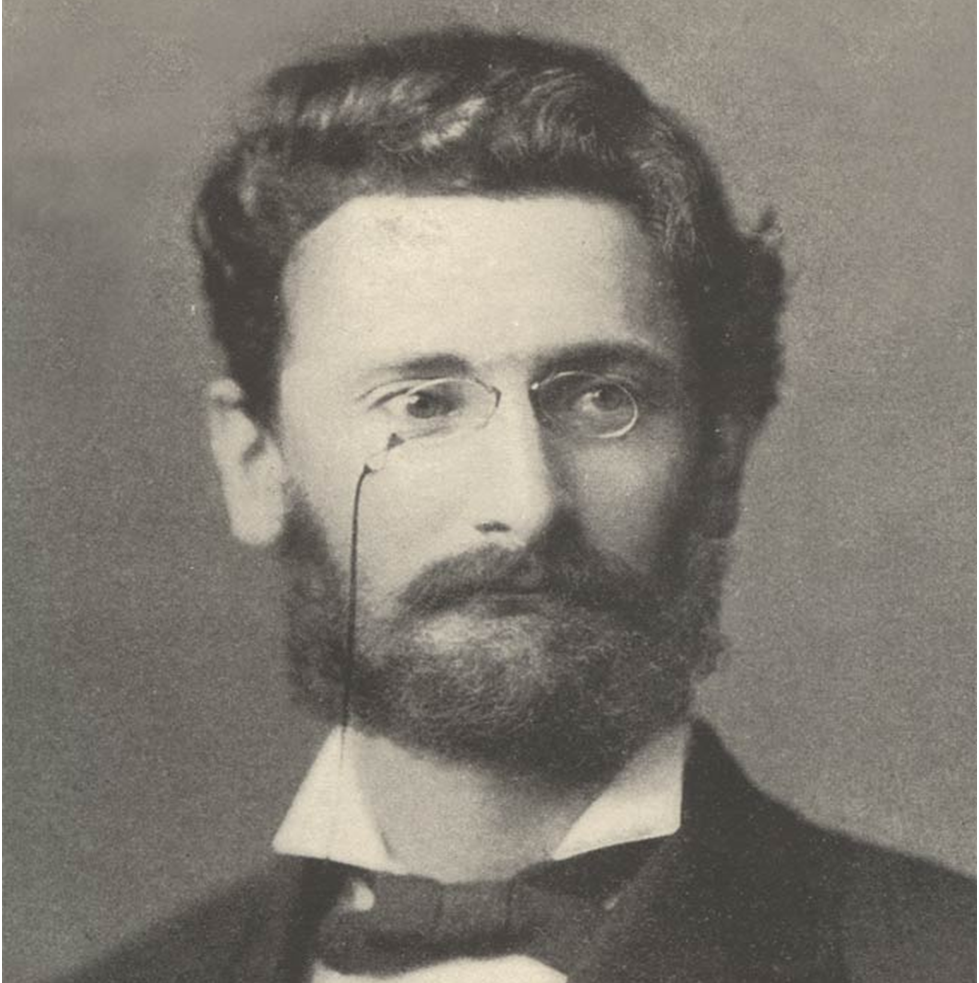
He is known for starting yellow journalism besides being a news publisher and posthumously establishing the most prestigious award for journalists – The Pulitzer Prize. The cause that led to his loss of vision is retinal detachment.
- Hellen Adams Keller, American author and activist (June 27, 1880 – June 1, 1968)

Helen Keller, known to be an advocate of disability rights, wasn’t born with congenital visual and hearing impairment but lost her vision and hearing ability when 19 months old due to an unknown illness.
- Alec Templeton, Composer, Pianist, and Satirist (July 4, 1909 – March 28, 1963)

Blind from birth, Alec Templeton studied at the Royal Academy, London and played in multiple orchestras. He also performed on radio and hosted his radio program – Alec Templeton Time.
Medical and Technological innovations to help people with low vision
The technological innovation of recent times is catering better to people with low vision. What are some of them? Let’s explore below.
Cataract
- Phacoemulsification surgeries to treat cataracts.
- TECNIS Symphony’s extended depth of focus – lens or EDOF lens permits patients to see the entire depth of vision without any hassle.
Glaucoma
- Microinvasive glaucoma surgery with FDA-approved iStent.
- FDA-approved Vyzulta releases nitric oxide to treat glaucoma.
- Similarly, Rhopressa, a Rho kinase inhibitor is also FDA-approved recently to lower the pressure in the eye.
Macular Degeneration
- Gene therapy for treating age-related macular degeneration.
- Implantable Miniature Telescope for AMD works by magnifying the field of view and enhancing central vision.
- IrisVision is inventing virtual reality goggles to help people with AMD.
Hyperopia
- Light changing inlays are implantables that can be placed under the cornea to sharpen the focus of the image by changing the light before it reaches the lens and thus minimising the need for reading glasses for farsightedness.
Others
- Mobile apps enabled with GPS receivers and text-to-speech translation apps are further designed to help people with low vision.
Final Takeaway
Hopefully, this blog answers your question as to why do blind people wear sunglasses. Most people possess some degree of vision and wearing sunglasses might help enhance their vision. It is also important to know that as per every individual’s condition; they might need to wear special glasses.
The prime proposals of the WHO World Report on Vision (2019) include observing World Sight Day every year to raise awareness. They also aim to collaborate with members to implement integrated people-centred eye care (IPEC) model by 2030. They are further focused on developing technical tools to support IPEC and making them more accessible to member countries.
FAQs
Do blind people wear special glasses?
Some visually impaired people might need special eyewear to filter out specific colours of light. As sunglasses tend to improve vision; therefore, they can wear prescription sunglasses.
What are the best sunglasses for blind people?
At the 33rd annual CSUN conference, the world’s largest assistive technology fair revealed the latest smart glasses designed for people with low vision. These include;
- NuEyes Pro – NuEyes Pro smart glasses from NuEyes is powered by the Android operating system and operates with voice commands or with a wireless controller.
- AIRA – These glasses utilize a camera and wireless connectivity to assist people with visual impairment.
- QD Laser – These glasses have mini computer screens that are capable of directly projecting the images on the retina with lasers.
Also Read: 10 AI Applications in Healthcare Marking Its New Era
Snigdha
Snigdha is a technical content writer professionally with an academic background in pharmaceutical sciences. She took up content creation to explore her passion for writing.
For TST, she likes crafting content about space explorations, scientific and technical innovations, and raising awareness about climate.
In her spare time, she loves going on orophilous adventures, reading, and painting.
Top 7 NFT Tokens Taking the World by Storm in 2022

Curious about which are the top NFT tokens in 2022? Learn about it from this post if you are considering buying NFTs for yourself.
By now you all must have already heard about NFTs. NFTs are creating quite a buzz over the last few years. In fact, in March 2021, NFTs made headlines when Beeple’s crypto art “First 5000 Days” grabbed the topmost position in the world of NFTs by becoming the most expensive NFT valued at 69 million USD. As per a report by Statista, the year-on-year growth projected by the NFT market cap is 138.7%.
The first NFT was launched in 2014 when Kevin McCoy minted Quantum. The world’s first permanent NFT art museum opened in Seattle, United States this year on January 14th to display art-based NFTs in a brick and mortar environment.
A report from The Business Research Company forecasts that the global NFT market size will reach $21.33 billion in 2022 growing at a CAGR of 52.1% from 2021 while it is expected to surpass a market valuation of $82.43 billion by 2026.
So, if you are wondering what is a non-fungible token, here is an interesting take on everything you need to know about NFTs.
What are NFTs and how do they work?

In simple terms, an NFT is a digital certificate (token) on a blockchain having unique identification codes and metadata (non-fungible.) Thus, they cannot be replicated. They also can’t be traded or exchanged like cryptocurrencies but can only be acquired by trading cryptocurrencies. They contain valuable information that ascertains their value.
How do NFTs work?
NFTs came into existence from the ERC-721 standard and it comprises ownership details, security, and metadata. The majority of NFTs are created with the help of Ethereum’s blockchain of smart contracts.
These cryptocurrency assets are minted (created) and sold using blockchain technology, which is a distributed public ledger. Since they are hosted on blockchain, therefore the transactions are completely traceable. Other characteristic features of NFTs are listed below:
- Their scarcity drives their value, a notion similar to that of crypto coins like Bitcoin.
- NFTs can be minted from digital forms of both physical and virtual or intangible objects.
- For physical objects, buyers acquire digital format files instead of the physical form of the object.
- The owner of the NFT reserves its full ownership rights.
- Each unique NFT has a unique owner too.
- Extensibility is another feature of NFTs. It means that two or more NFTs can be combined to give birth to a new breed of NFT.
An overview of the minting process:

Why NFTs are gaining prominence?
Top NFT tokens are gaining importance due to the following reasons:
- NFTs are perfect for representing tangible assets in a digital form like artwork, collectibles, music, etc. As they are blockchain-based, so they can simplify transactions by eliminating the need for intermediaries.
- Non-fungible tokens can also help the owners reach newer markets with potential customers.
- NFT improve market efficiency and streamlines the digital transactions processes.
- They are also incredibly efficient in managing the identity associated with each NFT within the digital world.
Invest in these top 7 NFT Tokens in 2022
Here are some of the top-performing NFT collections based on their all-time market volume according to CoinMarketCap.
1. CryptoPunks
Platform: Ethereum
All-Time Volume: 942,698.13 ETH
Estimated Market Cap: 687,964.22 ETH
Average Price: 45.29 ETH

CryptoPunks has made media appearances in The Financial Times, Bloomberg, The New York Times, and many more. An NFT project of the Larva Labs, Crypto Punks is what inspired the modern CryptoArt movement. Originally these NFT tokens were available for free but all were quickly acquired and now need to be purchased from the NFT marketplace.
Key Features:
- CryptoPunks comprises 10,000 unique characters of punky-looking girls, boys, apes, zombies, and aliens.
- These NFT tokens are 24×24 pixel art images generated with the help of algorithms.
- The punks are based on custom contracts and bear more resemblance to ERC20 tokens than ERC-21 tokens.
- The total value of all-time sales collectively amounts to $1.95 billion.
2. Bored Ape Yacht Club
Platform: Ethereum
All-Time Volume: 623,180.15 ETH
Estimated Market Cap: 977,890.47 ETH
Average Price: 23.37 ETH

The Bored Ape Yacht Club is a limited NFT collection on the Ethereum blockchain. This top NFT token is a unique digital collectible that doubles as your Yacht Club membership card. It also opens doors for members-only benefits like access to The Bathroom and other areas.
Key Features:
- You can acquire a Bored Ape for 0.08 ETH. The distribution is fair without any price tiers.
- The apes are hosted on IPFS and stored as ERC-721 tokens.
- Each ape is programmed uniquely from more than 170 possible traits of different expression, styles, headwear, etc.
- Buying a Bored Ape helps you gain access to the BAYC club and serves as your digital identity.
3. WIN NFT HORSE
Platform: BSC
All-Time Volume: 527,266,445.51 BUSD
Estimated Market Cap: 3,080,000 BUSD
Average Price: 50,383.8 BUSD

WIN NFT Horse lives on the Tron blockchain and is an innovative ecosystem of NFT, DeFi, and blockchain technology. GameFi in collaboration with Tron and APENFT is revolutionizing the world of gaming. Win NFT Horse is playable on the Tron Network as well as the Binance network.
Key Features:
- Win NFT Horse is an interactive open-source gaming platform.
- The game has four modes – Challenge, Match, Duel, and Arena.
- The Binance platform launched 10000 NFT tokens of WIN NFT Horse.
- The price of each token is 0.019 BNB.
4. Moonbirds
Platform: Ethereum
All-Time Volume: 152,917.29 ETH
Estimated market Cap: 219,482.71 ETH
Average Price: 18.03 ETH

Built by PROOF and based on the Ethereum blockchain, Moonbirds are a collection of 10,000 unique collections of utility-enabled PFPs. They feature rare traits and also provide access to private club membership coupled with extra benefits for nesting Moonbirds for a longer period.
Key Features:
- Moonbirds are IPFS-hosted.
- They help you gain access to the PROOF metaverse and also the PROOF Discord.
- Their unique PFP design facilitates locking them up and holding them for a longer period in your wallet.
- Moonbirds upgrade their tier levels and nests enabling newer rewards as the total nesting time increases.
5. Doodles
Platform: Ethereum
All-Time Volume: 139,280.21 ETH
Estimated Market Cap: 162,297.46 ETH
Average Price: 6.0517 ETH

If you are a fan of space voyages, then this is another top NFT token to acquire. With Space Doodles, you can venture into the vast galaxy to experience joy and discover rainbow puke. Designed by Burnt Toast, Space Doodles can be claimed for free by all Doodlers.
Key Features:
- Space Doodles are a collection of 10,000 NFTs.
- Doodle collection consists of hand-drawn Doodles including cats, apes, aliens, and more.
- Owning a Doodle helps you gain access to several products, features, and events.
6. World of Women
Platform: Ethereum
All-Time Volume: 70,716.49 ETH
Estimated Market Cap: 47,043.03 ETH
Average Price: 2.9143 ETH

The World of Women is more than just an NFT collection. It is a community that aims to create opportunities for anyone to be the owners, creators, and contributors of WoW from all around the world. WoW is also on a mission to build an inclusive web3 through its NFT collections and communities.
Key Features:
- The signature NFT collection released last year consists of 10,000 collectibles.
- The next collection of WoW Galaxy comprises 21,000 items portraying women.
- Owning WoW offers other benefits like ownership over the underlying artwork and IP.
- Each WoW NFT token has a floor price of 4.20 ETH and the WoW Galaxy token has a floor price of 0.49 ETH.
7. Pudgy Penguins
Platform: Ethereum
All-Time Volume: 54,811.97 ETH
Estimated Market Cap: 13,965.81 ETH
Average Price: 1.5214 ETH

Pudgy Penguins are one of the cutest-looking NFTs on the Ethereum blockchain. About 22,222 pudgys from the North form a might alliance in the fight against evil-doers.
Key Features:
- It is a profile picture (PFP) NFT project with 8,888 unique collectible Penguins.
- Each NFT is an ERC-721 token generated from more than 150 hand-drawn traits.
- It has a floor price of 0.93 ETH.
- The background story associated with Pudgy Penguins makes them unique.
How are top NFT tokens proving to be useful?
NFTs have so far been used for the following:

- Artwork – Artists can create a digital file of their artwork and convert it to an NFT. They can directly sell it to interested buyers, helping them retain the entire profits by eliminating galleries as middlemen. They can also opt-in to receive royalties whenever their artwork is sold to a new owner.

- Digital Content – Digital content creators can increase their profits by converting them to NFTs. Digital content could include anything from music to GIFs, videos, sports highlights, collectibles, and even virtual avatars.
- Gaming Items – Gamers need to spend a lot on buying in-game accessories and items. However, if the gaming items existed in the form of NFTs, then gamers could earn by selling those items once they were done utilizing them.
- Investments – Certain NFT projects are upcoming that would allow borrowing money through DeFi apps by using NFT as the collateral.
- Physical Items – Physical assets like real estate, etc. can transform the future of acquiring homes and cars.
- Collectibles – Individuals can build a collection of digital assets for rare artifacts having a rich history or cultural relevance.
Celebrity NFT ventures
Twitter co-founder Jack Dorsey converted his first tweet into an NFT and sold it for over $2.9 million. Here are some of the most expensive NFTs that are associated with some big celebrities.

Key difference between NFTs and Cryptocurrencies
Although crypto tokens and NFTs are both based on the blockchain, the key differences between both are pointed out below.
| NFTs | Cryptocurrencies |
| NFTs are non-fungible | Crypto tokens are fungible |
| Each NFT is unique | Crypto tokens of a single kind are not unique. |
| NFTs can be purchased using cryptocurrencies only. | Cryptocurrencies can be purchased with fiat money or other cryptocurrencies and vice-versa. NFTs are not needed to acquire crypto tokens. |
| NFTs can be bought or sold on NFT platforms like OpenSea, NBA Top Shot, etc. | Cryptocurrencies are available through crypto exchanges like Binance, Coinbase, etc. |
| NFTs are minted | Crypto tokens have to be mined |
Do NFTs have a high carbon footprint?
Yes, NFTs do contribute to the blockchain’s total carbon footprint. Since a majority of top NFT tokens are based on the Ethereum blockchain, therefore, they do contribute to massive amounts of energy consumption and release of CO2.
- In 2021, Ethereum’s power consumption was estimated to be around 103.17 TWh surpassing the electricity consumption of countries like Czechia or Colombia.
- According to CBS, Ethereum releases about 21.35 metric tons of CO2 each year.
- However, the upcoming Ethereum 2.0 based on proof-of-stake rather than PoW(proof-of-work) can bring down the blockchain’s energy consumption by 99.95%.
- Switching to Liquid Proof-of-Stake (LPoS) mechanism can also reduce energy consumption and consequently decrease the environmental release of CO2 .
- According to Digiconomist, Tezos, a proof-of-stake network, only utilizes 0.00006 TWh of electricity per year.
Contemplating about investing in top NFT tokens?
NFTs are the recent craze of the tech world. You just learned about what are NFTs and how do they work. Besides this, you also became aware of the top 7 NFT tokens to invest in 2022.
Now comes the question of whether you should invest in NFTs or not?
There isn’t a straight answer available for this question. On one hand, NFTs let you possess rare art pieces, artifacts, and other forms of collectibles. In the near future, NFTs might even be employed to acquire properties and might be a foolproof way of proving sole ownership over a property.
However, on the other hand, investing in NFTs comes with its risks. First of all, NFTs are quite new in the market and their performance trends are still unfathomable. Another reason is that NFTs might attract taxes. Next, you must always bear in mind that the value of NFTs is largely determined by their scarcity and what others are willing to pay for them. Therefore, the price of NFT tokens is demand-driven rather than fixed as per the technical, fundamental, or economic factors. You might also face challenges while selling it if there are no takers in the market.
So, you must consider all the factors before investing in NFTs and then decide after conducting a thorough market analysis.
FAQs
Are non-fungible tokens safe?
NFTs are based on the blockchain distributed over a public ledger which makes them safe, secure, and transparent. But if the platform that hosts the NFT runs out of business then you may lose access to your NFT.
Why do people buy NFT?
NFTs are gaining prominence due to the exclusivity it provides to the owner which further drives their value in the future. Thus, people are taking interest in NFTs because they consider them to be a valuable investment option. Those who are willing to possess rare artifacts are also investing in NFTs.
Where can I sell NFT crypto?
NFTs can be purchased and sold on NFT marketplaces. Some popular NFT marketplaces include OpenSea, Axie, NBA Top Shot, CryptoPunks/Larva Labs, Rarible, etc.
What are some NFT examples?
NFT examples include digital artwork, gaming accessories & items, domain names, event tickets, real estate assets, collectibles, etc.
Are NFTs mainstream now?
Well, NFTs are still not the most best-selling items or voguish in the world but they certainly are witnessing a surge in demand with celebrity ventures.
Which is the most expensive NFT sold till date?
At the time of writing this article, Artist Pak’s ‘The Merge’ is the most expensive NFT which sold for $91.8 million.
Summer Solstice 2022 – The Science Behind It & More

Summer Solstice 2022 – Discover what causes it to happen and what are the mythological, religious, and spiritual significance associated with it.
“Whatever you dream on this night will come to pass.”
William Shakespeare in ‘A Midsummer’s Night Dream’
Sun is such an integral part of our lives. The lone star of our planetary system makes our days and nights liveable. Earth’s habitability is majorly attributed to the Sun. Even our ancestors were not unaware of the diurnal cycle’s variations throughout the year.
A strong connection lies between the Earth’s movement with respect to the Sun and the transformation of seasons. Four focal points on the Sun’s movement between the Northern & the Southern Hemisphere mark four celestial phenomena; and they are – the Vernal Equinox, the Summer Solstice, the Autumnal Equinox, and the Winter Solstice.
Let’s get to know the scientific, mythological, religious, and spiritual significance associated with the summer solstice 2022.
What happens on the day of June solstice?
The term “solstice” is derived from the Latin word – solstitium which means Sun (sol) and still or stopped (stitium).
The Sun is at the northernmost point in the sky on the day of the June solstice or the summer solstice. Also, on this day the Sun is directly overhead at noon when observed from the Tropic of Cancer.
The Northern Hemisphere receives direct sunlight on this day. While the Northern Hemisphere experiences the longest day and shortest night, the Southern Hemisphere experiences the opposite on this day. It marks the astronomical first day of summer in the Northern Hemisphere and consequently the astronomical first day of winter in the Southern Hemisphere.
Summer Solstice 2022 – When is it?
Summer solstice 2022 is falling on June 21st. It will occur in the Northern Hemisphere at 5:14 a.m. EDT and can be experienced worldwide at the same moment as per the local time of each place.
The science behind the summer solstice made easy
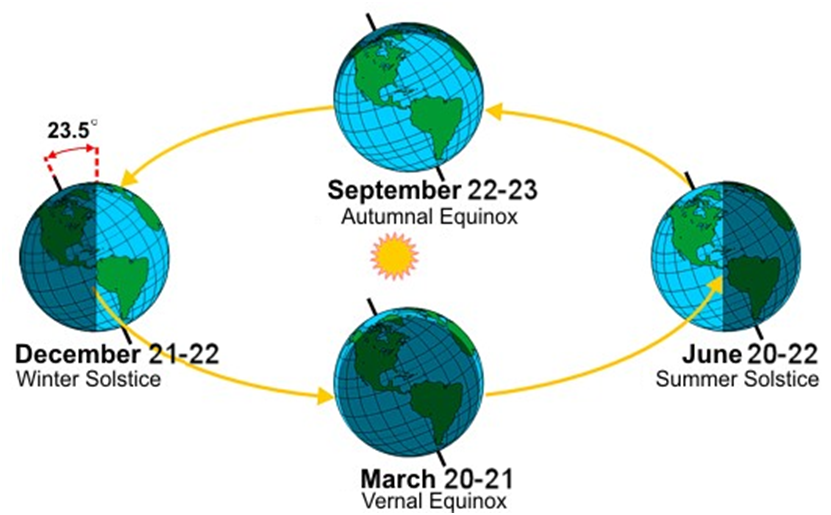
Image Credit: National Weather Service
Planet Earth is tilted on its axis by 23 and ½ degrees. Thus, the Earth doesn’t orbit the Sun upright. This causes different geographical locations on Earth to receive the Sun’s rays unevenly and further paves the way for season changes and four distinct astronomical events in the Northern & Southern Hemispheres.
On the day of the spring equinox, the Sun arrives at the planet’s Equator. Thereby, it begins its northerly excursion traversing through the Northern Hemisphere to reach the North Pole at the point of its maximum tilt at 23.5 degrees. This marks the June solstice.
After the summer solstice, the Sun begins moving back towards the Equator to reach it on the autumnal equinox. Post this, the Sun further moves to reach the South Pole on the day of December solstice and back towards the Equator.
The mythology associated with the summer solstice
Many ancient cultures observed the festival of Midsummer timed around the summer solstice. Midsummer eve was considered to be the day when the walls between the mortal and the spirit realm became permeable. The spirits and witches became active during the eve as portrayed in Shakespeare’s popular play –A Midsummer Night’s Dream.
People from the Nordic regions, Russia, Ireland, and the British Isles celebrated the Midsummer festival. The influence of certain pagan rituals, particularly the incorporation of fire and water was also predominant in the festival of Midsummer.
People would create fires around their houses to cleanse the environment from the negative energy of evil spirits. Later they would also participate in communal bonfires in their village. The communal bonfire played the role of purifying the environment and also invigorating the waning Sun.
Another ritual involved rolling a flaming wheel downhill into a lake or river where the flaming wheel represented the Sun and the seasons. In contrast, the inclusion of a water body in the ritual was a way of cherishing water for keeping the living beings alive during summers. Water was also a symbolic way of revering fertility.
Religious significance of the summer solstice
Did you know that the ancient Romans during the summer solstice celebrated Vestalia to honour Vesta, the Goddess of the Hearth? To celebrate this religious festival, married women would worship at the temple of Vesta and give her offerings to seek her blessings.

Image Credit: Life in Russia
In Russia, on Kupala Nights, maidens would float wreaths of flowers and candles into the rivers. Later the Church transformed this festival into the birth occasion of St. John the Baptist (June 24).

Image Credit: CGTN
Ancient Chinese commemorated this day to the Earth and the feminine energy. The dragon boat race was conducted in Zhejiang, a custom that is continued even in present times.
Mayans and Aztecs built temples to follow the solar movements. Aligning the shadows of the structures according to these movements helped them decipher astronomical events such as the summer & winter solstices. The existence of the Egyptian Pyramids, Stonehenge in England, and Machu Picchu in Peru are indicative of the fact that ancient civilizations monitored the yearly progress of the Sun’s rays falling on Earth.

Image Credit: Pinterest
Iranians even in modern times continue celebrating Tirgan on Tir 13, an ancient Persian midsummer festival. They dance, recite poetry, splash water, and serve traditional foods such as sholezard and spinach soup.
June solstice celebrations worldwide:
- Midsummer – Nordic, Slavic Nations, Ireland, British Isles
- Dragon Boat Festival – China & East Asia
- Tiregān– Iran
- Noc Kuplay – Poland
- Jaanipäev – Estonia
- Juhannus – Finland
- Jāņi – Latvia
- Rasos – Lithuania
- Day of Private Reflection (Ireland)
- St. John’s Eve – Catalan nations (Catalonia, Balearic Islands, Valencia, Andorra, etc.)
- National Indigenous Peoples Day – Canada
- Fremont Solstice Parade – Fremont, Seattle, Washington, US
- Santa Barbara Summer Solstice Parade – Santa Barbara, California, US
- International Surfing Day
- International Yoga Day
- World Music Day
Spiritual significance of the summer solstice
Since ancient times, older civilizations like the Harappans, Aryans of the Vedic age, the Persians, the Babylonians, the Incas, and the Mayans have revered the holy Sun.
The Sun is the source of all power and energy in this world. Sun’s energy is synonymous with positive energy. Thus, the Sun can stimulate our spirit’s energy too.
I don’t know about others but nothing can cheer me up more than a bright, sunny morning.
In modern times, this day is also observed as International Yoga Day. If you think yoga is just for the body then your knowledge is incomplete for yoga encompasses the spirit, mind, and body. One facet of yoga deals with cleansing the mind and awakening one’s spirituality.
How to spend the day of the June solstice?
Summer solstice 2022 is the perfect time of the year to get in touch with your spiritual self and to reflect on your life. You can experience this magnificent day from anywhere. This is the perfect day to feel indebted to the Universe for your existence and to revere the cosmos.
If you can take some time off your busy schedule on this year’s June solstice, then just head out to enjoy the Sun during the wee hours of the day. Alternatively, you could go hiking, walk in the forest in solitude, contemplate by the lake, or go for a day picnic with your loved ones. The winter solstice will occur on December 21, 2022 at 4:48 P.M. EST.
Also Read: We Want to Control Everything
10 AI Applications in Healthcare Marking Its New Era
AI applications in healthcare and medicine are a fairly evolving concept but it can spurt the healthcare industry towards a new direction of better patient care through effective diagnosis, treatment, and reduction in the time & cost of drug development.
What’s possible with AI is no longer limited to sci-fi novels & movies but we are sensing its presence already in real-life. Aren’t we witnessing the presence of AI in the IT and the Telecom sector already? Similarly, the healthcare sector is no longer behind in the race to incorporate AI for enhancing patient care.
In 2020 March, when WHO assigned the pandemic status to Covid-19, the health management system of the world was not only unprepared for it, it even stood on the brink of collapse in some third-world nations. It was then that disinfection robots, CDC’s AI-powered bots screening for Covid-19 infections, autonomous PPE deliveries, and AI-driven thermal scanners came into the picture to save the day.
Artificial intelligence in the healthcare market expanded at a rate of 167.1% from 2019 to 2021. By 2028, Vantage Market Research estimates that the global AI healthcare market will grow at a CAGR (compound annual growth rate) of 46.1%. Further, it is estimated to reach a valuation of $95.65 billion from the current value of $6.6 billion.
Therefore, let’s dive into the article to know about the ten AI applications in healthcare and gain a grasp of how the healthcare sector will undergo a paradigm shift over the coming years.
What is artificial intelligence in medicine?
According to the book Artificial Intelligence in Medicine, “Artificial Intelligence itself can be defined as the technology that enables computers to perform more intelligently.” “Thereby, AIM (Artificial Intelligence in Medicine) refers to the Artificial Intelligence which is trained at performing medical applications.”
Computer vision, machine learning (ML), and deep learning (DL) are the sub-groups of AI. ML utilizes certain traits to identify patterns for analyzing specific situations. DL consists of algorithms to create an artificial neural network (ANN) to learn and make decisions analogous to human intelligence. Computer vision helps a computer gain more understanding from images and videos.
According to a 2018 report by Forbes, AI would most prominently be applicable in image analysis, robotic surgery, virtual assistants, and providing support for clinical decisions. Whereas, a 2019 report from McKinsey also highlighted other areas of application such as cognitive devices, targeted & personalized medicines, electroceuticals, and robotic-assisted surgery.
A brief history of AI’s evolution in healthcare
The below infographic explains the transition and evolution of AI in healthcare.
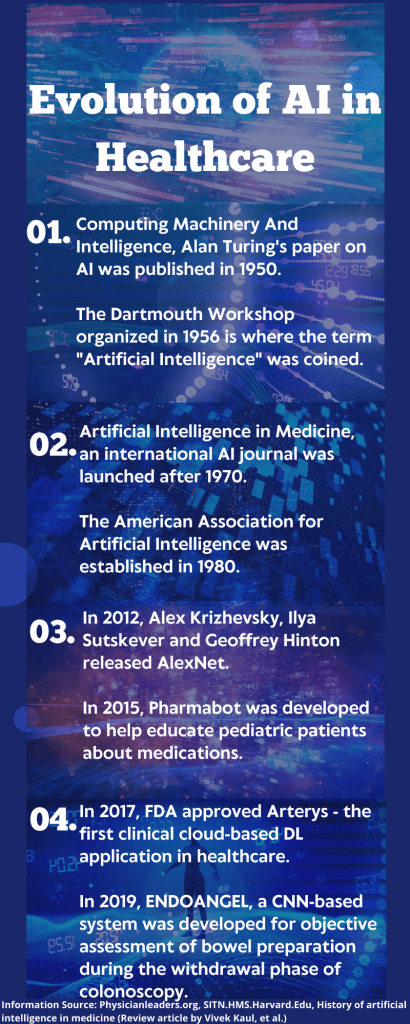
Advantages of AI in medicine
The integration of artificial intelligence into medicine and healthcare is beneficial in more than one way, and they are:
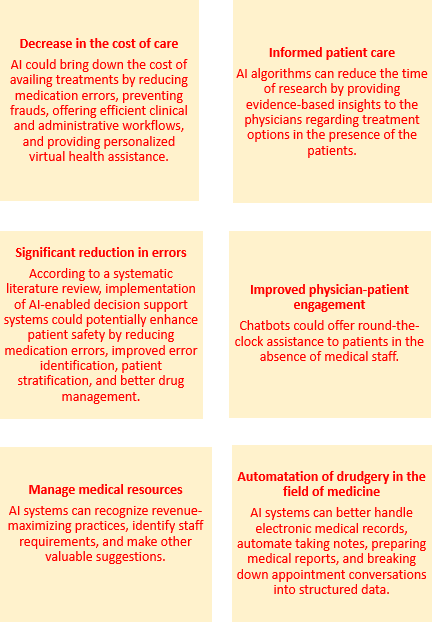
10 revolutionary AI applications in healthcare
Check out these ten implementations of AI in healthcare and medicine.
1. Employing genome sequencing to implement precision medicine
Researchers are estimating that by the next decade a significant part of the world population would have access to their entire genome sequencing. An organism’s whole genome sequencing comprises 100 to 150 GB of data that can have varied utilities.
According to CDC, sequencing refers to the determination of the order of bases and whole genome sequencing (WGS) refers to determining the order of bases of an organism in a single process.
Deep Genomics is a Canada-based health tech company pioneering new treatment methods with AI.
- They are trying to find a correlation between the massive amounts of genetic datasets and EMR to identify disease markers.
- This would eventually help them to recognize therapeutic agents for targeted drug delivery, lead optimization, toxicity assessment, and effective trial design. Thus, WGS and AI can help treat genetic diseases by employing precision medicine.
2. Medical visualization for performing surgical procedures

The application of deep learning and artificial neural networks can aid in improving computer vision algorithms. This could play a pivotal role in enhancing the precision of surgical procedures.
- AI-enabled robotic surgeries can hasten the time required to perform surgeries. It can also minimize many invasive procedures. Johns Hopkins University’s STAR (smart tissue autonomous robot) performed laparoscopic surgery on pig’s soft tissue independently sans a surgeon’s aid.
- Besides this, surgeons employed AI-assisted robots to suture narrow blood vessels of 0.03 – 0.08 mm at Netherland’s Maastricht University Medical Center.
3. Prompt diagnosis of diseases with AI

Viz.ai is an Intelligent Care Coordination Platform that employs AI-powered solutions to save patient’s life by promoting coordination between multidisciplinary teams and frontline medical professionals.
- The platform’s mission is to make use of artificial intelligence in healthcare to increase people’s access to immediate treatment and prevent delays. It is accessible through smartphones, personal computers, and tablets.
- Viz.ai facilitates mobile image viewing of CT, CTA, MRI, X-Ray, EKG, USG, etc.
- Besides this, it can help physicians receive real-time patient information, promote bi-directional electronic health records integration, and alert multi-disciplinary teams for immediate action.
4. Virtual Nursing Assistants

As per ReportLinker, virtual nursing assistants can save the healthcare industry $20 billion in a year and is thereby regarded as one of the most brilliant AI applications in healthcare.
- AI-powered virtual nursing assistants can track a patient’s vitals, alert the clinicians in case of emergencies, and interact with the patients in real-time.
- They can also guide patients throughout their treatment course.
- Care Angel is an artificially intelligent nurse that can boost health awareness. It can furnish constant healthcare management inexpensively to drive better clinical outcomes. It also offers real-time notifications and unique insights for effective and timely clinical interventions.
5. Enhancing the efficiency of clinical trials

Clinical trials can sometimes be complete in six to seven years. As per a report by Grand View Research, the market size value of the global AI-based clinical trials solution provider was $1.3 billion in 2021 and is expected to grow up to 22% by 2030.
- The use of AI in healthcare and clinical trials can significantly reduce the time taken to achieve patient outcomes by intelligently furnishing medical codes in a shorter time.
- Two CROs, Biostata and Prosciento took the help of IBM Watson Health to employ AI for searching the correct MedDRA codes.
- AI reducing the searches by 70% – 80% for medical coders for the number of verbatim that needed two or more searches compared to the searches performed without employing AI.
6. Better cancer prognosis with AI

As per a study by Johns Hopkins, about one-third of deaths happen as a consequence of misdiagnosis or delayed diagnosis. Wrong prognosis is the most prominent cause of serious medical errors. In the U.S., about 12 million people face diagnostic errors each year and among them, about 40,000 to 80,000 people die.
- PathAI, an AI-enabled tech company that is working towards enhancing patient care by assisting pathologists in making improved cancer diagnoses.
- It’s working in collaboration with biopharma, laboratories, and clinicians to develop better individualized medical treatment. Thus, it has entered into strategic partnerships with Roche, BMS, and Bill & Melinda Gates Foundation for further expansion.
7. Development of biopharmaceuticals

The development of novel drugs is another incredible example of AI implementation in healthcare. The involvement of artificial intelligence in drug development can reduce the time taken to identify new therapeutic agents and the development timelines. Further, it optimizes R&D economics and increases the chances of success.
- BioXcel Therapeutics is a clinical-stage biopharmaceutical company that is using an innovative approach to develop neuroscience and immune-oncology drugs with the aid of AI techniques.
8. Better management of patients in hospitals

Google’s DeepMind Health is an AI software that can track and collect patient symptoms and help clinicians make a quick prognosis to initiate a faster treatment plan for the patients.
- This way DeepMind can shorten the time lapse occurring between diagnostic tests and the onset of treatment to improve the chances of survival.
- This platform is capable of accelerating the process of diagnosis of ailments by combining its humongous dataset to identify the symptoms faster.
9. Targeted drug delivery using DL

BenevolentAI is pioneering drug discovery and development by combining pharmaceutical science with deep learning and artificial intelligence.
- The company is collaborating with big pharma to license therapeutic agents designed with better target selection through deep learning’s help.
- They aim to unravel complex diseases and provide effective therapies to patients as required by them.
10. AI-based personal health tracking app

Another brilliant use of artificial intelligence in healthcare involves better management of chronic conditions for diabetic, cardiac, and hypertensive patients with AI-enabled digital tools.
- One Drop is a one-stop whole-person solution to manage weight, hypertension, type 1 & 2 diabetes, and cholesterol.
- The One Drop Premium app offers health coaching, tracks essential health data, and also establishes health trends.
- It syncs with other popular fitness apps and devices too.
- The 2022 MedTech Breakthrough Awards Program named One Drop’s app as the Best Personal Health App.
Prominent business groups working on AI healthcare projects
Here are the most prominent business groups that are vigorously working towards the incorporation and application of AI in healthcare.

What are the success factors of AI applications in healthcare?
In a recent study Adam Bohr and Kaveh Memarzadeh the factors that are supporting the application of AI in healthcare have been discussed:
- Accurate assessment of disease condition.
An MIT-based lab researched extensively to create a sequence modeling for earlier detection of depression through speech pattern recognition.
- Better management of complications associated with some diseases.
Implementation of machine learning techniques could predict whether patients having type 2 diabetes are susceptible to developing further complications such as nephropathy, neuropathy, retinopathy, or early cardiovascular diseases.
- Providing improved assistance for patient care.
Virtual health assistants could remind patients to take their medicines on time every day.
- Providing a boost to extensive medical research
Predictive Oncology has declared its decision to launch an AI platform for achieving new diagnostics and producing vaccines with the help of 12,000 computer simulations per machine.
New challenges to mitigate with AI’s implementation in healthcare
According to reports from Deloitte, Brookings, and SITN the risks that are going to arise with the full-scale application of AI in healthcare and their possible solutions are discussed below.
1. Addressing patient privacy challenges
The use of artificial intelligence in healthcare involves the generation, collection, and reliance on a huge amount of patient data, clinical trial data, and pharmaceutical data. The following solutions can mitigate the risks arising out of data storage and sharing across organizations.
- De-identifying the data before sharing it across organizations is an effective way to ensure patient privacy and data safety.
- Setting strict policies and regulations across organizations to ensure proper sharing of patient data.
- Direct investment in the generation of high-quality datasets is another solution. In this regard, the United States’ All of Us initiative and the U.K.’s BioBank was launched.
- Also, taking industry-level measures to safeguard against hackers and unauthorized access.
2. Quality oversight gap mitigation
The Food and Drug Administration (FDA) reviews the commercially marketed AI products created for the healthcare industry. However, certain AI systems don’t fall under the FDA’s purview such as the ones that don’t typically cater to the field of medicine or are developed in-house by hospitals.
- In such scenarios, the American College of Radiology, the American Medical Association, EFPIA, other regulatory agencies of other nations, and hospitals should step in to evaluate the effectiveness of such AI health systems.
3. Resolving concerns regarding the acceptance of AI-powered trials
When it comes to approving clinical trials, the FDA sticks to stringent approval criteria. This requires full transparency around the data collection methods, and the scientific methods used to evaluate the results to reach conclusions. However, when it comes to relying on algorithm-generated conclusions regarding trials, then a lot is at stake. This is because many algorithms utilize complex mathematics that is not always easy to decipher and decode, thereby, being referred to as a ‘black box.’ Also, entrepreneurs, researchers, and organizations might not be willing to reveal their proprietary methods entirely.
- Therefore, one way to mitigate this problem would be by updating the patent law where an algorithm is allowed to be patentable irrespective of whether it is a part of a physical machine or not.
4. Mitigating the knowledge gap between professionals and patients
With the implementation of AI in healthcare, a demand arises in the necessity to educate computationalists, healthcare professionals, and also patients. This is because the FDA and the other pharmaceutical regulatory agencies haven’t provided universal algorithm approval guidelines. Also, programmers creating the algorithms lack the knowledge of medical practitioners while clinicians and patients are not tech-savvy.
- This problem can be overcome by conducting knowledge transfer sessions to help computationalists and mathematicians comprehend the field of medicine and patient care while physicians and patients need to understand how to employ the algorithms in the best possible way.
In Conclusion
The use of AI in healthcare is still in its nascent phases and needs some time before clinicians, researchers, and patients fully get the hang of it. Artificial Intelligence is not yet fully ready to replace clinical training and judgement. It must only be used to improve the quality of patient care and to boost the productivity of healthcare professionals.
At this point, it is essential to ensure that providers and physicians are only incorporating AI in regular workflows. Additionally, AI is also accelerating the speed of pharmaceutical treatment development.
However, at this stage, health systems, organizations, and medical professionals should not begin depending too much on AI technologies so that they lose their clinical expertise. At the same time, AI recommendations must always be evaluated and monitored by clinicians before implementing them on patients.
FAQs
1. How AI is used in healthcare?
Nowadays, there are multiple ways in which artificial intelligence is being used in the healthcare industry. To know more about it, read the above article.
2. What are the benefits of AI in healthcare?
The use of AI in healthcare offers numerous benefits. Most importantly, it is useful in implementing personalized patient care. Other than that, it is playing a key role in accelerating pharmaceutical research & development and boosting the productivity of the medical staff.
3. What is the future of AI in healthcare?
In the future, AI implementation in healthcare could range from chatting with patients, conducting medical record reviews, preparing analytical reports, reading and deciphering radiology images, making treatment plans, and reminding patients to take their medications on time.
4. Who is leading AI in healthcare?
Remedy Health is a San Francisco-based company which is the best AI healthcare company in the world in 2022.
Also Read: 12 Groundbreaking Recent Medical Discoveries
16 Must Watch Movies On Climate Change

This blog walks you down a list of 16 intriguing movies on climate change that can make you brood over the climate crisis.
Did you know the CO2 emissions due to energy-related activities on a global scale were around 36.44 billion metric tons in 2019. Scientists and environmental activists have been warning the world population about the adversities of climate change for a long time.
Vitruvius, a Roman writer and architect, probably first wrote about climate change when discussing ways to choose housing architecture and city locations in the 1st century BC. Next, a Chinese scholar of the Northern Song dynasty and Statesman Shen Kuo explained the theory of gradual climate change over centuries in their book published in 1088.
But, James Edward Hansen, a distinguished scientist and an American professor at the Earth Institute of Columbia University once expressed that warning about the consequences of climate change is similar to screaming at people from behind a soundproof glass wall. Quite a similar notion was portrayed in the Netflix blockbuster released last year – Don’t Look Up.
The importance of cinema comes here which has often been a preferred medium of conveying crucial messages and even radical theories to the masses effectively. People relate to engaging movies more than any other form of mass media. Therefore, we have curated a list of the best documentaries and commercial movies on climate change for the climate-conscious cinephiles.
16 gripping movies on climate change
This section of the article will enumerate great tales told in the best documentaries about climate change and the best climate change movies that will blow your mind.
Best documentaries about climate change
Documentaries often cut the theatrics to tell an unknown and true tale to create awareness among a wider audience.
1. Carbon Nation (2010)
Available On: Prime Video, VUDU, HULU
IMDb Rating: 7.0/10
Director: Peter Byck
Carbon Nation is undoubtedly the best climate change documentary because it educates us about climate change from an optimistic perspective – no negative vibes and no despair.
Narrated by Bill Kurtis, this documentary was made in collaboration with Arizona State University. It focuses on what are the different climate change solutions and celebrates the heroes at the forefront of the impending climate crises.
Rather than turning the limelight on the carbon load created due to the burning of fossil fuels, this documentary highlights the technological and community-based energy solutions to reduce the carbon footprint.
2. The Island President (2011)
Available On: Prime Video
IMDb Rating: 7.2/10
Director: Jon Shenk

The government of Maldives has been panic-stricken ever since 1988 regarding the sea-level rise and sinking of 1196 small islands as a direct consequence of global warming.
According to several reports from NASA and the U.S. Geological Survey, almost 80% of the Maldives would be rendered uninhabitable by 2050.
A documentary by Jon Shenk, The Island President, emphasizes the efforts of Mohamed Nasheed, the President of the Maldives Islands back in 2011. The movie premiered at the Telluride Film Festival and was showered with accolades by the Toronto International Film Festival and the Sundance Institute.
3. Chasing Ice (2012)
Available On: Prime Video, Google Play Movies & TV, Apple TV/iTunes, Microsoft Movies
IMDb Rating: 7.7/10
Director: Jeff Orlowski

As per NASA, the polar ice caps are thawing at an alarming rate of 9% every decade. Since the 1960s the Arctic Ice has reduced by 40%. A single block of the Arctic’s ice called the Ward Hunt Ice Shelf began cracking in 2000 and is now splitting into little pieces.
James Balog, a nature photographer went to the Arctic Circle to capture the melting of the Arctic glaciers with his revolutionary time-lapse camera (Extreme Ice Survey) to get a multi-year record.
4. Chasing Coral (2017)
Available On: Netflix
IMDb Rating: 8.1/10
Director: Jeff Orlowski

After the glaciers, if anything else is taking the direct brunt of global warming, it is the corals. According to NPR, the world’s 14% of coral reefs were lost between 2008 to 2019.
More than 500 hours of underwater footage collection and coral bleaching submissions acquired from volunteers of 30 countries, paved the way for this Netflix climate change documentary.
For this documentary, a team of marine biologists, scientists, divers, and photographers came together for an epic underwater campaign to find out the reason of coral bleaching and its direct correlation to global warming.
5. Kiss the Ground (2020)
Available On: Netflix
IMDb Rating: 8.2/10
Director: Joshua Tickell, Rebecca Harrell Tickell

Featuring science experts and celebrity climate activists like Ian Somerhalder and Gisele Bündchen, Kiss the Ground, is described as “Groundbreaking” by Awards Daily.
Narrated by Woody Harrelson, this documentary takes you on a journey of renewed hope by enlightening us about the first viable solutions to the human-made climate crisis.
With innovative graphics, visual representations, and authentic footage from NASA and NOAA, this documentary unveils how the Earth’s soil can be rejuvenated and lost ecosystems restored to stabilize our planet’s climate.
6. Youth v Gov (2020)
Available On: Netflix
IMDb Rating: 6.8/10
Director: Christi Cooper

In 2015, 21 young plaintiffs sue the government of the US for its ignorance and indolence towards the climate crisis. Youth v Gov is the story of the 21 American youth vs. The United States of America constitutional lawsuit.
Our Children’s Trust, a legal non-profit has been representing the interest of the country’s youth. This landmark case against one of the world’s most powerful governments is filed for violating the constitutional rights of the youth to liberty, life, personal safety, and property by allowing the climate crisis to unfold through inaction, indifference, and parsimony.
7. David Attenborough: A Life on Our Planet (2020)
Available On: Netflix
IMDb Rating: 8.9/10
Director: Alastair Fothergill, Jonathan Hughes, Keith Scholey

Sir David Attenborough, biologist, author, and English broadcaster narrates this British Netflix climate change documentary. He begins his narrative overview from Pripyat (infamous for the Chernobyl disaster) and transcends through Africa, the Arctic, and Antarctica.
This documentary is described as a “witness statement” where Sir David Attenborough recounts his key moments as a documentarian. He expresses his views on how the planet is moving towards the Anthropocene extinction event due in a century’s time rather than a few millennia needed for the previous mass extinctions.
8. I Am Greta (2020)
Available On: Hulu
IMDb Rating: 7.7/10
Director: Nathan Grossman

Who hasn’t heard of Greta Thunberg, the teenage environmental activist? Thunberg attracted attention when she began holding placards 2018 onwards outside the Swedish Parliament with the words – “Skolstrejk för klimatet” (school strike for climate).
She further garnered public attention and even gained support from big Hollywood stars when she challenged Donald J. Trump, the 45th President of the United States, for climate change mitigation.
This Hulu documentary follows Thunberg on her international movement to catch the attention of the intellectual masses, world leaders, and the world media.
Best climate change movies
A good drama, fantasy, thriller, or action-packed film can sometimes speak to your heart and leave a mark forever. There is no dearth in climate change Hollywood movies that can pull you out of your cocoon to confront the stark reality. Here begins the list of commercial movies on climate change.
1. The Day After Tomorrow (2004)
Available On: Prime Video, YouTube, Apple TV, Google Play Movies & TV
IMDb Rating: 6.4/10
Director: Roland Emmerich

What would happen if the sea level rises unprecedentedly?
This is what is depicted in the movie The Day After Tomorrow. A Jake Gyllenhaal starrer, this sci-fi film is undoubtedly one of the best climate change movies of all time. Based on the book The Coming Global Superstorm by Art Bell & Whitley Strieber, this film envisages the aftermath that would follow after the disruption of the North Atlantic Ocean Circulation.
The movie shows the onset of a sudden ice age in the northern hemisphere and the survival struggle of the people trapped in such places. Besides this, it also portrays the blindness of global political leaders, paleoclimatologist Jack Hall’s endeavor to bring back his son home, and the best part of the movie lies in the illustration of humanity’s fragility in front of Mother Nature’s mightiness.
2. Avatar (2009)
Available On: Prime Video, Disney Hotstar, YouTube, Apple TV, Google Play Movies & TV
IMDb Rating: 7.8/10
Director: James Cameron

A futuristic movie where humankind has escaped to Pandora to find a new means of sustenance after depleting Earth’s resources completely and debilitating her environment, James Cameron’s Avatar is the highest-grossing movie of the modern era. Avatar also bagged three Academy Awards for Best Art Direction, Best Visual Effects, and Best Cinematography.
Avatar highlights the energy crisis that humanity would face on Earth in the next century, thereby forcing them out of their home planet in search of a valuable mineral “unobtanium” on Pandora, a fictional gas giant in the Alpha Centauri star system.
3. Snowpiercer (2013)
Available On: Netflix
IMDb Rating: 7.1/10
Director: Bong Joon Ho

If you are looking for a thrilling and chilling post-apocalyptic dystopian movie on climate change that presents the picture of Earth after humanity fails to deal with the climate change crisis, then Snowpiercer would make a perfect watch.
The beauty of the movie lies in the accurate portrayal of humanity’s ineptness to revere what they still have and the constant strife for resources, survival, and the need to dominate.
It is based on the French graphic climate fiction novel Le Transperceneige by Jacques Lob, Benjamin Legrand, and Jean-Marc Rochette. Snowpiercer will shock you when it would unveil the delicate balance between the good and evil that supposedly holds everything in between. This critically acclaimed movie features outstanding performances from Chris Evans and Tilda Swinton.
4. Interstellar (2014)
Available On: Prime Video, YouTube, Apple TV, Google Play Movies & TV
IMDb Rating: 8.6/10
Director: Christopher Nolan

An all-time favorite of mine and a masterpiece of Nolan, Interstellar is a modern-age movie that transcends time, space, dimensions, and even gravity. It is not just a movie that projects hope for humankind’s future, it indeed shows how alone humans can hinder and help each other to survive and always find a way.
It features an ensemble cast including Mathew McConaughey, Anne Hathaway, Jessica Chastain, Matt Damon, and Michael Caine in important roles and commendable performances from then-child actors Mackenzie Foy and Timothée Chalamet.
Kip Thorne, Caltech’s theoretical physicist and 2017 Nobel laureate in Physics, acted as the chief scientific consultant for the film and was also an executive producer for the movie. Besides this, did you know that Kip Thorne also wrote a tie-in book, The Science of Interstellar?
It shows Earth in 2067 when six billion people have been lost due to an acute food crisis, the planet is being devoured by extreme dust storms, crop blights, and an imbalance in the atmospheric oxygen and nitrogen levels is ultimately threatening a mass extinction of the human species.
5. Mad Max: Fury Road (2015)
Available On: Netflix, Prime Video, YouTube, Google Play Movies & TV
IMDb Rating: 8.1/10
Director: George Miller

Mad Max: Fury Road is a post-apocalyptic action film envisioning a future facing a dearth of gasoline and water. Set in a desert wasteland, it is the story of two individuals who want to set free from the cult leader.
With a tagline of “the future belongs to the mad,” this movie takes you on an action-packed ride. Considered to be one of the greatest action movie of all time, it won six Academy Awards including Best Costume Design, Best Sound Editing & Sound Mixing, Best Makeup and hairstyling, Best Production Design, and Best Film Editing.
6. Geostorm (2017)
Available On: Prime Video, YouTube, Google Play Movies & TV, Apple TV
IMDb Rating: 5.3/10
Director: Dean Devlin

Gerard Butler starrer Geostorm is a science fiction disaster movie that conveys a simple message that humans can never control nature.
Set in the near future, this is one of the movies on climate change that shows the catastrophic side of humans trying to take control over climate itself and directing weather phenomena.
In 2019, when Earth is enduring severe weather conditions, “Dutch-Boy” – climate-controlling satellites are pioneered and launched around Earth to maintain the habitable climate of each region. Soon it becomes the target of havoc-wreakers leading to cataclysmic events.
7. The Boy Who Harnessed the Wind (2019)
Available On: Netflix
IMDb Rating: 7.6/10
Director: Chiwetel Ejiofor

Based on the memoir of William Kamkwamba, written by him and Bryan Mealer, The Boy Who Harnessed The Wind, is the story of a 13-year-old schoolboy living in Kasungu Malawi.
In this British drama film, the young boy builds a prototype first and then innovates a wind turbine using his family’s bicycle to save his village from drought and famine. Thus, this movie demonstrates how the younger generation plays a crucial role in devising climate change solutions.
8. Reminiscence (2021)
Available On: Prime Video, YouTube, Google Play Movies & TV, Apple TV
IMDb Rating: 5.8/10
Director: Lisa Joy

Starring Hugh Jackman and Rebecca Ferguson, Reminiscence is a neo-noir sci-fi movie built with the impact of climate change in the backdrop.
In the future, when global warming has led to the rise in sea level in several coastal belts of the world including Miami and people are unable to work during the daytime forcing them to walk out at night, old memories are what people are holding onto.
The Final Verdict
The first-ever documentary on climate change was released in 1958 called The Unchained Goddess by Frank Capra. Next, in 1983, PBS’s NOVA became the most-watched primetime science series in the US that addressed climate change challenges.
So, movies on climate change, documentaries, and docuseries can kickstart the adequate amount of climate-consciousness among the masses that even elaborate climate reports and news articles fail to achieve. Eco-friendly content not only surpasses genre-specific barriers, but also entertains, enthralls, and thrills you just like flicks from other genres.
Hopefully, our recommendations will not only provide you with enough content to do a movie marathon over a long weekend but it will also enlighten you about the global climate crisis and the role you can play to reduce your carbon footprint.
 TheScientificTriangle
You must be logged in to post a comment.