TheScientificTriangle
What about the environment and science
Why Do Blind People Wear Sunglasses – An Expert Take

Why do blind people wear sunglasses? If this question has been on your mind for long, then know the medical reasons behind the same by sparing a few minutes to read this post.
According to WHO, about 2.2 billion people either have near or distant vision impairment. Most visually impaired people are above the age of 50 years. Uncorrected cataracts and unaddressed refractive errors are among the most prominent causes of vision impairment.
Ocular impairment from unaddressed myopia alone causes a financial burden of USD 244 billion. Ocular impairment can stem from a number of causes either associated with the eye or some disorder of the brain. As per the International Classification of Diseases 11, visual impairment can be predominantly classified into near vision impairment and distance vision impairment.
While walking down the streets, it is common to come across visually impaired people wearing sunglasses. People who have undergone cataract surgeries or are suffering from conjunctivitis also need to wear shades. It might pique your curiosity as to why they need to don shades. So, here are the scientific reasons that explain why do blind people wear sunglasses.
Ever wondered why blind individuals wear sunglasses? Read this article to understand the importance of privacy and regulating light for those with vision impairments.
Blind people wear sunglasses for a variety of reasons. While it might seem counterintuitive, as they have no sight, there are several ways that dark glasses can improve the quality of their lives and offer protection from the sun’s harmful UV rays. From providing privacy to regulating light sensitivity, here is why blind people wear sunglasses.
Explaining the Purpose of Wearing Sunglasses:
Wearing sunglasses has beneficial effects for the blind beyond just protection from UV rays. Sunglasses allow those with vision impairments to enjoy a greater sense of privacy and can help regulate light sensitivity. Dark glasses reduce glare, which is especially helpful if a visually impaired individual chooses to go outdoors, as bright sunlight can be particularly uncomfortable. Additionally, sunglasses add an extra visual cue to a blind person’s outfit, helping them better fit in with their sighted peers.
Types and Causes of vision impairment
There can be innumerable reasons that affect people’s vision and the spectrum of vision impairment is quite broad, differing from person to person at different stages of life. Starting from congenital abnormalities to accidents, injuries, exposure to toxic chemicals and diseases can lead to partial or complete loss of vision.
- Colour Blindness – This is a genetic disorder affecting mostly men and is characterized by the inability of people to perceive red and green colours and to also differentiate between different colour gradients.
- Night Blindness – Night blindness or Retinitis Pigmentosa is associated with the affected person’s loss of vision in low or dim lights. It can occur due to both genetic reasons and acquired reasons.
- Snow Blindness – This kind of temporary blindness is characterized by vision loss when exposed to ultraviolet rays. It happens due to the swelling of cells on the corneal surface.
- Congenital Blindness – Due to complications in pregnancy or some other reasons, the ocular organ doesn’t develop properly and can lead to complete vision impairment since childhood.
- Retinopathy of Prematurity – This occurs in babies born prematurely. It begins when blood vessels of the eye bleed causing scarring of the eye and retinal detachment.
- Acquired Blindness – Glaucoma, untreated cataract, age-related macular degeneration, Vitamin A deficiency, and vascular diseases associated with the retina or optic nerve are usually other leading causes of blindness. Besides this, diseases such as strokes, malignancies, hereditary diseases, chemical poisoning, accidents, and physical injuries to the brain or eye can also lead to visual impairment.
- Cerebral Visual Impairment – Cerebral/Cortical visual impairment causes visual impairment in children and is a brain-related disorder. CVI often coexists with another cause of visual impairment.. People with CVI have difficulty processing the eyes perception.
Why do blind people wear sunglasses – 5 must-know reasons
A stereotype associated with why do blind people wear sunglasses is that they try to hide their eyes. However, we will explore the scientific take behind why they need to wear sunglasses.
1. For vision improvement
As per the American Foundation for the Blind; legal blindness can be defined as the extent of vision loss that can determine someone’s eligibility to receive benefits. Clinical diagnosis of a 20/200 vision or less in the better-seeing eye or a visual field less than 20 degrees without moving the eyes side to side refers to legal blindness.
Most visually impaired people do not experience a total loss of vision and using sunglasses or special glasses enables them to see in a narrow zone (tunnel vision) and focus better.
2. Protection from UV rays
Whether a person is legally blind or has 20/20 vision, using sunglasses during the daytime and at the outdoors can protect the eyes from ultraviolet rays. This is because exposure to UV rays can lead to macular degeneration, photokeratitis, and pterygia. Thus, wearing dark-coloured glasses can protect the eyes.
Vision loss also might lead to photophobia, hence using shades can help prevent light sensitivity. Sunglasses also cut down the glare as glare is known to significantly reduce the visual field of a visually impaired person.
Sometimes, blind people also experience pain when exposed to bright light which is due to migraines that happen to people who lack photoreceptors – rods or cones. Therefore, wearing protective glasses can benefit visually impaired people in more than one way.
3. Protection from physical injuries
Sunglasses act as a physical barrier against sharp objects, dust, or other particles from entering the eyes of visually impaired people as it can consequently lead to injuries and infections. Injuries can be more harmful to people with legal blindness as it can worsen their eye condition.
4. To notify people about their condition
Another reason why do blind people wear sunglasses is to alert people in public places of their condition. People with vision impairment don shades and use a walking cane. This is great for their safety and also for the people around them.
5. For aesthetic reasons
Visually impaired people are often responsive to the varied sound frequencies around them. Thus, they may not be able to make constant eye contact with the people who are communicating with them. Hence wearing shades reduces the awkwardness and makes people be more at ease with them and vice-versa.
People who have been in accidents that led to their vision impairment might also have wound marks or disfigurations around their eyes. So, some may prefer covering their eyes with protective glasses.
7 Famous people who were visually impaired
- Homer, Greek poet
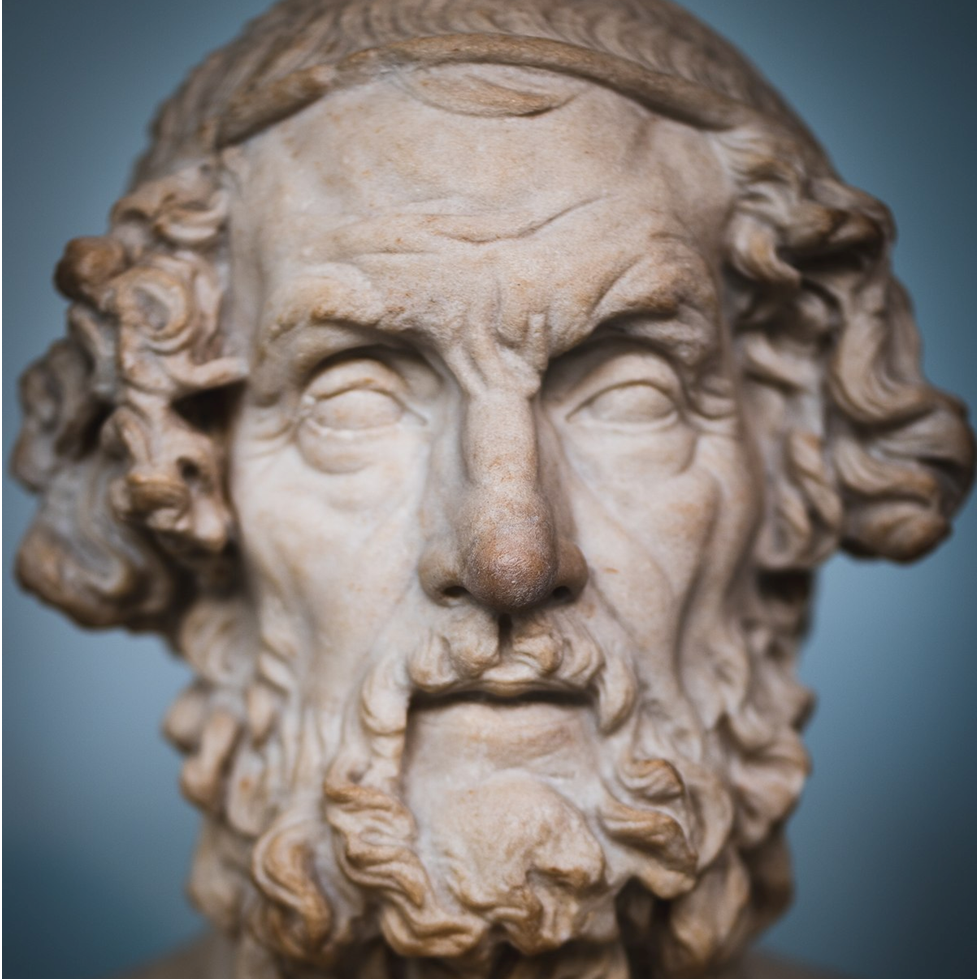
Author of epic poems like the Illiad and the Odyssey, Homer was also known to live with blindness.
- Galileo Galilei, Italian Astronomer, Physicist, Mathematician, and Philosopher (February 15, 1564 – January 8, 1642)

Highly acclaimed for making improvements to the telescope and discovering the four largest moons of Jupiter, Galileo’s vision impairment is related to age-related impairment.
- Louis Braille, French educator and inventor (January 4, 1809 – January 6, 1852)

He is known for inventing Braille to help blind people to read. Accidental self-stabbing in the eye with an awl lead to his blindness.
- Thomas Rhodes Armitage, British physician (April 2, 1824 – October 23, 1890)

He founded the Royal National Institute of Blind People. He was a practicing physician who suffered from a deteriorating vision which eventually led to a total loss of vision.
- Joseph Pulitzer, Hungarian-American Publisher (April 10, 1847 – October 29, 1911)
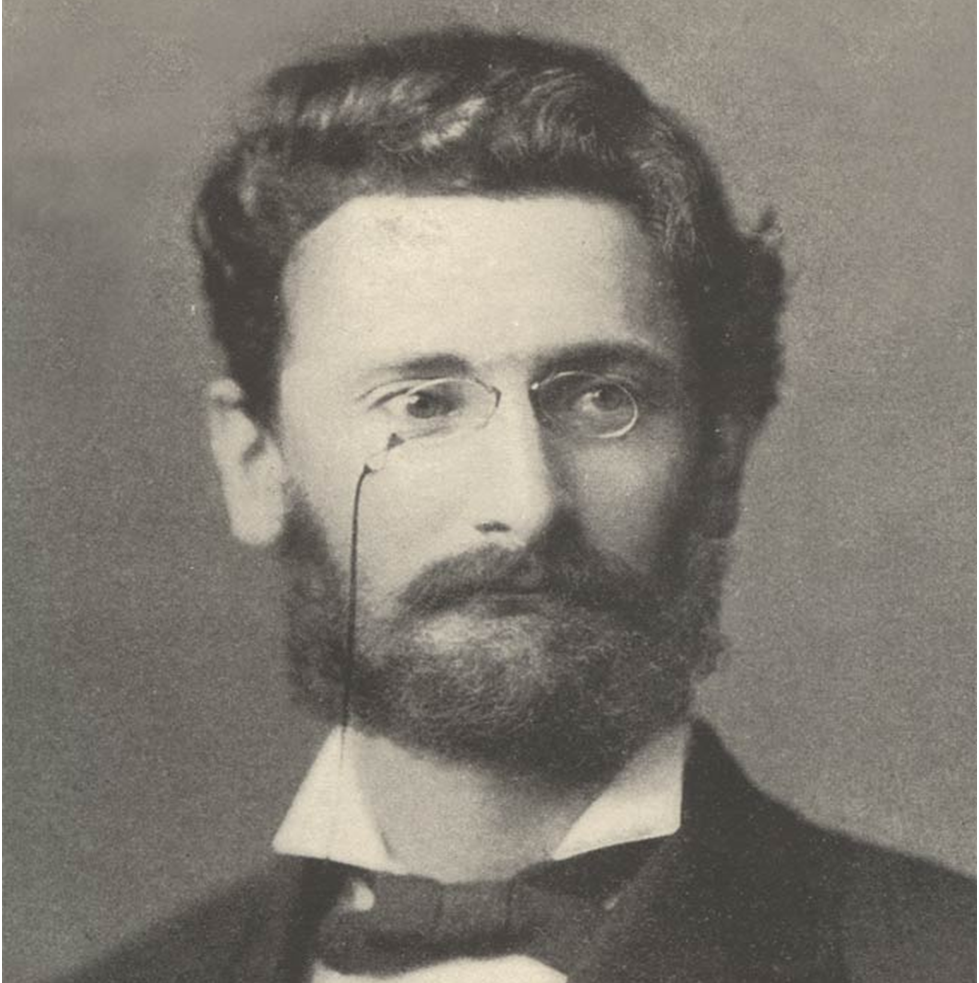
He is known for starting yellow journalism besides being a news publisher and posthumously establishing the most prestigious award for journalists – The Pulitzer Prize. The cause that led to his loss of vision is retinal detachment.
- Hellen Adams Keller, American author and activist (June 27, 1880 – June 1, 1968)

Helen Keller, known to be an advocate of disability rights, wasn’t born with congenital visual and hearing impairment but lost her vision and hearing ability when 19 months old due to an unknown illness.
- Alec Templeton, Composer, Pianist, and Satirist (July 4, 1909 – March 28, 1963)

Blind from birth, Alec Templeton studied at the Royal Academy, London and played in multiple orchestras. He also performed on radio and hosted his radio program – Alec Templeton Time.
Medical and Technological innovations to help people with low vision
The technological innovation of recent times is catering better to people with low vision. What are some of them? Let’s explore below.
Cataract
- Phacoemulsification surgeries to treat cataracts.
- TECNIS Symphony’s extended depth of focus – lens or EDOF lens permits patients to see the entire depth of vision without any hassle.
Glaucoma
- Microinvasive glaucoma surgery with FDA-approved iStent.
- FDA-approved Vyzulta releases nitric oxide to treat glaucoma.
- Similarly, Rhopressa, a Rho kinase inhibitor is also FDA-approved recently to lower the pressure in the eye.
Macular Degeneration
- Gene therapy for treating age-related macular degeneration.
- Implantable Miniature Telescope for AMD works by magnifying the field of view and enhancing central vision.
- IrisVision is inventing virtual reality goggles to help people with AMD.
Hyperopia
- Light changing inlays are implantables that can be placed under the cornea to sharpen the focus of the image by changing the light before it reaches the lens and thus minimising the need for reading glasses for farsightedness.
Others
- Mobile apps enabled with GPS receivers and text-to-speech translation apps are further designed to help people with low vision.
Final Takeaway
Hopefully, this blog answers your question as to why do blind people wear sunglasses. Most people possess some degree of vision and wearing sunglasses might help enhance their vision. It is also important to know that as per every individual’s condition; they might need to wear special glasses.
The prime proposals of the WHO World Report on Vision (2019) include observing World Sight Day every year to raise awareness. They also aim to collaborate with members to implement integrated people-centred eye care (IPEC) model by 2030. They are further focused on developing technical tools to support IPEC and making them more accessible to member countries.
FAQs
Do blind people wear special glasses?
Some visually impaired people might need special eyewear to filter out specific colours of light. As sunglasses tend to improve vision; therefore, they can wear prescription sunglasses.
What are the best sunglasses for blind people?
At the 33rd annual CSUN conference, the world’s largest assistive technology fair revealed the latest smart glasses designed for people with low vision. These include;
- NuEyes Pro – NuEyes Pro smart glasses from NuEyes is powered by the Android operating system and operates with voice commands or with a wireless controller.
- AIRA – These glasses utilize a camera and wireless connectivity to assist people with visual impairment.
- QD Laser – These glasses have mini computer screens that are capable of directly projecting the images on the retina with lasers.
Also Read: 10 AI Applications in Healthcare Marking Its New Era

Snigdha
Snigdha is a technical content writer professionally with an academic background in pharmaceutical sciences. She took up content creation to explore her passion for writing.
For TST, she likes crafting content about space explorations, scientific and technical innovations, and raising awareness about climate.
In her spare time, she loves going on orophilous adventures, reading, and painting.
 TheScientificTriangle
Pingback: Is The Earth Spinning Faster - Are We Doomed?
Pingback: Why do people rub their feet together-3 Reasons Identified
Pingback: Why blind people prefer wearing black glasses - Today Posting
Pingback: 7 Tips for Choosing the Right Colour Scheme for Your Website - Free Article Submission Site List | Free Guest Post Site List
Pingback: What Is the Free Personality Color? - Just Info Live